



TL;DR:
- Trade-specific recruiting focuses on sourcing, screening, and placing skilled trades professionals using detailed industry knowledge and passive candidate networks. It ensures better candidate fit by verifying certifications, understanding role distinctions, and building relationships within trade communities. This targeted approach produces faster, higher-quality hires crucial for trades businesses facing labor shortages and complex credential requirements.
Trade-specific recruiting is defined as a targeted hiring approach that sources, screens, and places skilled trades professionals using deep knowledge of industry certifications, technical competencies, and role-specific candidate networks. Unlike general recruiting, this method accounts for the variables that determine real field readiness: OSHA certifications, apprenticeship history, union standing, and equipment proficiency. For mechanical contractors hiring HVAC technicians, licensed plumbers, or project superintendents, the difference between a generalist recruiter and a trade-specific one is the difference between a filled seat and a qualified hire. This guide explains how trade-specific recruiting works, what it requires, and why it produces better outcomes for skilled trades businesses.
What does trade-specific recruiting mean compared to general hiring?
Trade-specific recruiting, also called industry-specific recruiting or specialized recruitment, is the practice of limiting recruiting focus to a defined sector and building deep expertise in that sector’s roles, credentials, and talent pools. General recruiting applies broad sourcing methods across industries. Trade-specific recruiting applies narrow, precise methods within one.
General recruiting fails in trades because it misses the variables that matter most: certifications, regulatory compliance, technical competencies, compensation benchmarks, and talent scarcity. A recruiter who does not know the difference between a journeyman HVAC technician and an apprentice cannot screen candidates accurately. That gap leads to longer time-to-hire, misaligned placements, and higher turnover risk.
“Specialized recruiting replaces guesswork with expertise by leveraging deep industry knowledge and talent networks, delivering better hires and faster results.” — Davron Staffing
The trades sector compounds this problem because up to 80% of the skilled workforce is passive talent not visible on standard job boards. A recruiter relying on Indeed or LinkedIn keyword searches will miss most of the available talent pool. Trade-specific recruiters build relationships with that passive segment through niche networks, referrals, and direct outreach. That access is the core competitive advantage of the approach.
For contractors in HVAC, plumbing, and mechanical construction, industry-specific recruiting is not a premium option. It is the only method that consistently produces qualified candidates for technical and leadership roles.

What skills and knowledge does trade-specific recruiting require?
Effective trade-specific recruiting requires more than sourcing experience. It demands operational knowledge of how trades businesses run, what field roles actually involve, and how to evaluate credentials that standard applicant tracking systems overlook.
Here are the core competencies a trade-specific recruiter must possess:
- Credential verification. Effective trade recruiters verify apprenticeship logs, union history, OSHA safety certifications, and tool and equipment experience. These qualifications rarely appear in a clean, scannable format on a resume.
- Role differentiation. Understanding the distinction between an apprentice, journeyman, and master tradesperson is non-negotiable. Each level carries different licensing requirements, pay expectations, and job scope.
- Compliance knowledge. Trades roles often require state-specific licenses, EPA certifications for HVAC, or plumbing board credentials. A recruiter who cannot verify these creates liability for the contractor.
- Passive candidate engagement. Building relationships with experienced tradespeople who are not actively job searching requires consistent outreach, referral cultivation, and presence in trade-specific communities. Learn more about passive candidate recruiting and how it applies to skilled trades hiring.
- Compensation benchmarking. Trade-specific recruiters use labor market data to set realistic salary expectations, which prevents offer rejections and reduces time wasted on misaligned candidates.
Pro Tip: When evaluating a recruiting partner for trades roles, ask them to explain the difference between an EPA 608 certification and an NATE certification. If they cannot answer, they are not trade-specific.
Successful specialist recruiters close the gap between role requirements and generalist misunderstandings by mastering trade-specific vocabulary and operational knowledge. That fluency is what allows them to assess a candidate’s actual field readiness rather than just their resume presentation.
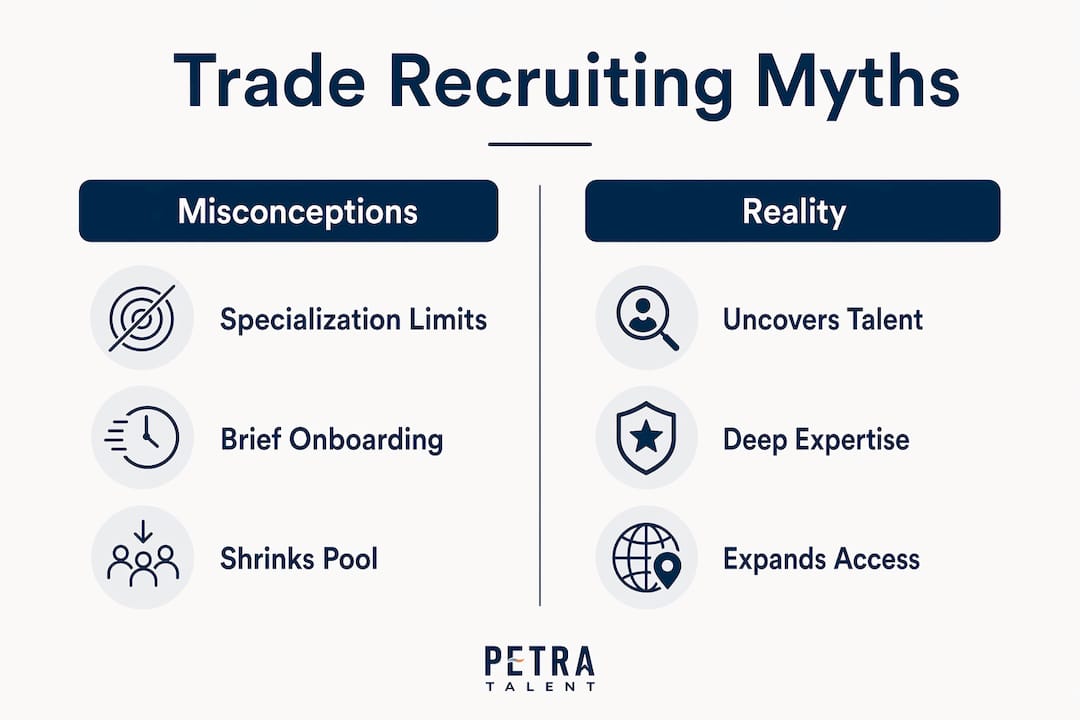
Common misconceptions about trade-specific recruiting
The most persistent misconception about trade-specific recruiting is that specialization shrinks the candidate pool. Contractors sometimes assume that a recruiter focused only on HVAC or plumbing will have fewer candidates to offer than a generalist with access to all industries. The data contradicts this directly.
| Misconception | Reality |
|---|---|
| Specialization limits candidate options | Specialization uncovers passive talent generalists never reach |
| General recruiters can learn trades quickly | Trades credentials and compliance require months of operational knowledge to evaluate accurately |
| Job boards cover most available talent | Up to 80% of skilled tradespeople are passive candidates not visible on standard platforms |
| Rigid background checks identify the best candidates | Competency-based vetting aligned to trade roles produces stronger, longer-tenured hires |
A second misconception is that any recruiter can get up to speed on trades requirements with a brief onboarding. In practice, understanding the difference between a commercial HVAC installation role and a residential service technician role requires familiarity with equipment types, customer interaction expectations, and licensing structures that take significant time to internalize. Generalists filling these roles by keyword matching produce candidates who look qualified on paper but fail in the field within months.
Reshoring manufacturing growth in 2026 is intensifying this problem. Specialized roles tied to domestic production require niche skills and local market knowledge that generalist recruiters simply do not carry. Trade-specific recruiting is the method that addresses this gap directly.
How to implement trade-specific recruiting in your business
Contractors and recruitment professionals can adopt trade-oriented hiring processes without rebuilding their entire operation. The shift requires focus, the right partnerships, and a commitment to vetting that goes deeper than resume review.
- Rewrite job descriptions around trade competencies. Replace generic language like “strong communication skills” with specific requirements: EPA 608 certification, experience with Carrier or Trane commercial systems, or journeyman plumber license in the state of operation.
- Partner with a specialized recruiting agency. A specialized recruiting partner helps clarify role requirements, identify qualified candidates, and reduce wasted time through structured searching and communication. This is especially valuable for urgent or hard-to-fill positions.
- Use technical vetting before interviews. Screening candidates on trade-specific knowledge before the interview stage eliminates unqualified applicants early and protects the hiring manager’s time.
- Build a referral network within the trades. Experienced tradespeople know other experienced tradespeople. A structured referral program that rewards employees for qualified introductions is one of the most cost-effective sourcing tools available.
- Use labor market data to plan ahead. Half of employees will require reskilling by 2030, which means talent scarcity in trades will intensify. Contractors who build pipelines now will be better positioned than those who hire reactively.
Pro Tip: Do not wait for a vacancy to start sourcing. Trade-specific workforce strategies work best when candidate relationships are built before a role opens, not after.
For HVAC contractors specifically, understanding how specialty trade recruiting works for your sector gives you a concrete framework for evaluating recruiting partners and internal hiring processes.
Key takeaways
Trade-specific recruiting produces better hires than general recruiting because it applies industry knowledge, passive candidate access, and competency-based vetting to roles that generic methods cannot fill accurately.
| Point | Details |
|---|---|
| Core definition | Trade-specific recruiting targets skilled trades roles using deep knowledge of certifications, compliance, and candidate networks. |
| Passive talent access | Up to 80% of skilled tradespeople are passive candidates, only reachable through specialized outreach. |
| Credential verification | Apprenticeship logs, OSHA certifications, and union history require manual review that ATS systems miss. |
| Misconception corrected | Specialization expands quality candidate access rather than limiting it. |
| Implementation priority | Rewrite job descriptions, partner with specialists, and build referral pipelines before vacancies open. |
Why trade-specific recruiting is the only approach worth taking seriously
I have watched contractors spend months cycling through generalist recruiters, each one promising a strong candidate pool and delivering resumes that do not survive a ten-minute technical conversation. The problem is not effort. It is the absence of the foundational knowledge required to evaluate a trades candidate accurately.
What most hiring managers do not realize is that the screening failure happens before the interview. When a recruiter does not know what questions to ask about a candidate’s field experience, they pass through people who can talk well but cannot perform. That costs contractors far more than a recruiting fee.
The future of trades hiring will not get easier. Skilled labor demand is rising while the pipeline of new tradespeople entering the workforce remains constrained. Contractors who build relationships with specialized recruiting partners now will have a structural advantage over those who continue relying on general staffing firms. The trades are not a category that rewards generalist approaches. They reward depth, relationships, and technical credibility. That is exactly what trade-specific recruiting delivers.
— David
How Petratalent supports trade-specific hiring for contractors
Petratalent specializes in recruiting for HVAC, plumbing, and mechanical construction roles across the United States. The firm’s process covers direct hire placements, leadership searches, technical vetting, and workforce consultation, built specifically for mechanical contractors who need qualified technicians, project managers, and superintendents.
For contractors navigating a tightening labor market, Petratalent’s approach to HVAC hiring trends in 2026 provides both market context and a direct path to qualified candidates. The firm also offers plumbing trade recruitment services for contractors who need licensed plumbers vetted against state-specific credential requirements. If your current recruiting process is producing misaligned hires or extended vacancies, Petratalent’s trade-specific model is built to fix that.
FAQ
What is the trade recruiting definition in simple terms?
Trade-specific recruiting is a hiring method focused exclusively on skilled trades roles, using specialized knowledge of certifications, licensing, and candidate networks to source and vet qualified professionals.
How does trade recruiting work differently from general staffing?
Trade recruiters verify credentials like OSHA certifications, apprenticeship logs, and state licenses that general recruiters typically overlook, and they access passive candidates through niche networks rather than standard job boards.
What are the main benefits of trade-specific recruitment?
The primary benefits are faster placement of qualified candidates, lower turnover from better role alignment, and access to passive talent that represents up to 80% of the skilled trades workforce.
Does specialization in recruiting reduce the number of available candidates?
No. Specialized recruiting expands access to qualified candidates by reaching passive professionals through targeted outreach, producing a higher-quality pool than keyword-based general searches.
When should a contractor use a specialized recruiting firm?
Contractors should engage a specialized recruiting firm for technical, urgent, or leadership roles where credential verification and field-readiness assessment are critical to a successful hire.
Recommended
Related Posts

August 29, 2026
Paid Internships That Convert Interns to Hires for HVAC Trade Schools
Contractor playbook to launch HVAC trade school partnerships. Use paid internships and PAC involvement to…

August 28, 2026
Diversity Hiring in the Trades: A Contractor’s Action Plan
Explore actionable strategies for improving diversity hiring in the trades. Enhance outreach, retention, and career…

August 27, 2026
The Recruiting KPIs Construction Hiring Managers Should Track
Discover essential recruiting KPIs for construction hiring managers. Track metrics like quality of hire and…
August 26, 2026
Plumbing Estimator Hiring: A Contractor’s Playbook
Discover how to efficiently hire a plumbing estimator by leveraging multiple sourcing strategies and defining…