


TL;DR:
- Leadership hiring is essential for subcontractors to shift from owner-dependent operations to scalable management structures. Building a leadership layer at each growth milestone enables more contracts, reduces owner workload, and fosters sustainable expansion. Effective leadership skills, structured onboarding, and clear organizational systems ensure successful integration and retention of new managers.
Leadership hiring is the single mechanism that moves a subcontracting business from owner-dependent operations to a company capable of scaling revenue, managing multiple crews, and winning larger contracts. How subcontractor growth requires leadership hiring is not a theory. It is a documented pattern: owners who try to manage everything themselves hit a ceiling, while those who build a leadership layer break through it. Owners working 70-hour weeks without delegation face burnout and business plateau. The fix is deliberate, structured leadership recruitment tied to specific growth milestones.
How subcontractor growth requires leadership hiring at every stage

The industry term for this transition is “management capacity building.” It describes the process of adding supervisory and administrative roles that allow the owner to step back from daily operations and focus on business development. Without this capacity, growth stalls.
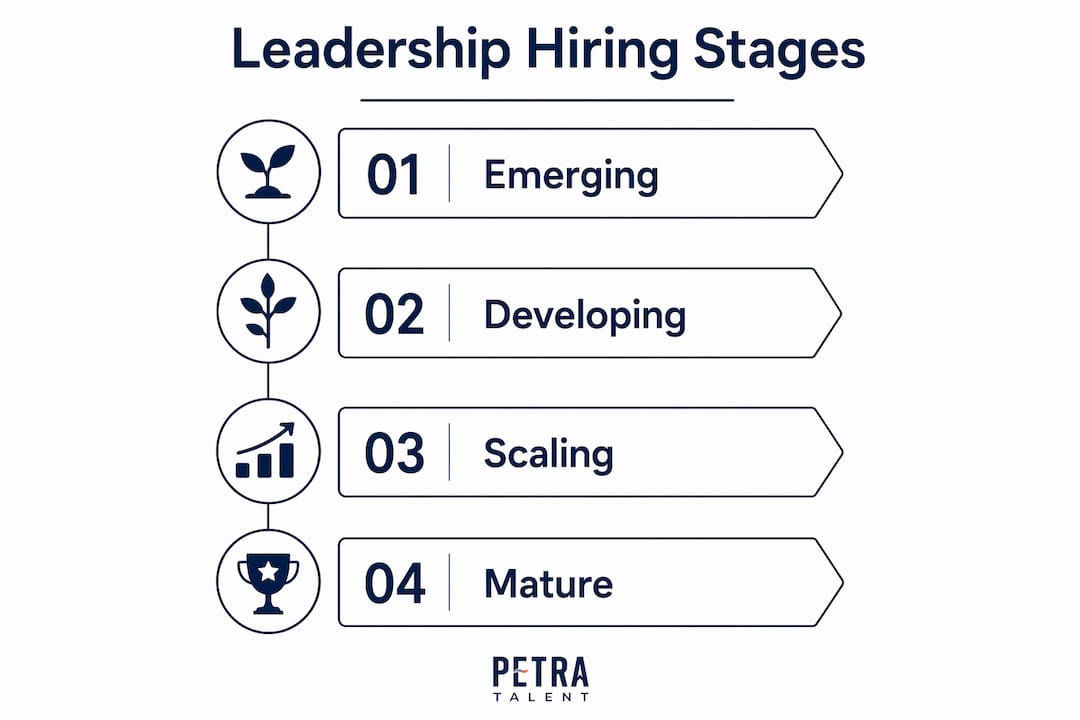
The roles subcontractors need vary by revenue stage. The table below maps the most common leadership hires to their growth milestones and expected financial impact.
| Growth stage | Key leadership hire | Salary range | Revenue impact |
|---|---|---|---|
| $500K to $1M | Lead foreman | $55K–$75K | Frees owner for sales and estimating |
| $1M to $3M | Production manager | $65K–$90K | Enables $500K+ in new business |
| $3M+ | Project manager, estimator | $75K–$110K | Supports multi-project execution |
| Any stage | Office administrator | $40K–$60K | Reduces owner admin load by 30–40% |
A production manager at $65K–$90K typically enables the owner to secure over $500,000 in new business. That math makes the hire self-funding within months. The critical mistake owners make is hiring too many leaders at once. One strategic hire ahead of demand is the right pace. Adding three new managers simultaneously creates confusion over reporting lines and drains cash before the revenue catches up.
Pro Tip: Hire one leadership role ahead of your current demand, not two. Give that person 90 days to prove the model before adding the next layer.
Why leadership skills matter more than experience alone
Field supervisors hired for leadership skills, not just technical experience, act as stabilizers that reduce the uncertainty killing productivity on jobsites. This distinction is the most overlooked factor in subcontractor management strategies.
A technician who is excellent at HVAC installation or plumbing rough-in is not automatically a good foreman. The skills are different. Leadership in the field requires anticipating material shortages, communicating schedule changes to crews, and resolving conflicts before they affect quality. Technical expertise alone does not prepare someone for those demands.
The consequences of getting this wrong are measurable. Promoting supervisors based solely on trade experience without leadership training results in bottlenecks, burnout, and reduced jobsite productivity. That outcome is common because owners default to promoting their best technician rather than identifying who actually leads.
The qualities that define a strong field supervisor include:
- Proactive communication with the owner and GC before problems escalate
- Ability to manage crew schedules and hold people accountable without micromanaging
- Comfort with uncertainty and changing site conditions
- Willingness to document progress and flag issues in writing
“Strong supervisors who lead with communication and foresight act as vital stabilizers that keep projects on schedule and crews motivated under changing conditions.” — Builder Outlook, 2026
For subcontractors in HVAC and plumbing, understanding how leadership hiring differs from technical roles is the starting point for building a team that actually scales.
How to manage leadership hires and protect company performance
Effective subcontractor management strategies require owners to evaluate new leaders quickly and act decisively when performance falls short. Waiting too long on a poor hire is one of the most expensive mistakes in the trades.
A structured approach to managing new leadership hires looks like this:
- Set clear expectations in week one. Define the role’s responsibilities, reporting structure, and 30-day performance targets in writing before the hire starts.
- Coach actively for the first 30 days. Meet weekly, give direct feedback, and document conversations. This creates a record and gives the hire a fair opportunity to adjust.
- Act within 30 days if coaching fails. If performance issues persist after coaching, remove the individual quickly. Bad hires damage crew morale, quality, and safety.
- Use stay interviews for existing leaders. Stay interviews proactively discover why top performers might leave, allowing owners to address culture and retention risks before turnover occurs.
- Build structured onboarding. A written onboarding checklist reduces the time a new leader spends figuring out basic processes and accelerates their contribution.
Pro Tip: Run a stay interview with every key leader once per quarter. Ask two questions: “What keeps you here?” and “What would make you consider leaving?” The answers will tell you more than any performance review.
Deliberate leadership that invests in communication, career development, and culture reduces recruiting costs and improves retention. That is not a soft benefit. It is a direct cost reduction.
What organizational structures support leadership integration?
Growth becomes chaotic when the owner remains the bottleneck. Building repeatable systems and clear reporting lines is the structural work that makes leadership hires stick. Without it, new managers default to asking the owner for every decision, which defeats the purpose of hiring them.
The comparison below shows the difference between an owner-centered structure and a leadership-driven one.
| Dimension | Owner-centered model | Leadership-driven model |
|---|---|---|
| Decision making | Owner approves everything | Managers own their departments |
| Reporting | All staff report to owner | Clear department heads with defined scope |
| Scalability | Capped by owner’s time | Grows with each leadership hire |
| Owner’s focus | Daily operations | Business development and strategy |
| Risk | Single point of failure | Distributed across leadership team |
The departments subcontractors need to build as they scale include:
- Estimating: An estimator or project manager who owns the bid process without owner involvement in every line item
- Operations: A production manager or superintendent who manages field crews, schedules, and subcontractor coordination
- Administration: An office manager who handles invoicing, compliance, and vendor communication
Owners must overcome the temptation to micromanage and delegate authority to leadership hires in operations, estimating, and administration to fuel business growth. Documented procedures and regular cross-team communication meetings are the two tools that make delegation work without creating chaos. A weekly operations meeting with department leads, combined with written standard operating procedures, gives leaders the structure they need to make good decisions independently.
Hiring one ahead of demand with proper onboarding is the strategic approach that scales leadership teams without excessive training costs or turnover risk.
Key takeaways
Leadership hiring is the primary driver of subcontractor growth because it replaces owner dependency with scalable management capacity across operations, estimating, and administration.
| Point | Details |
|---|---|
| Hire by growth milestone | Match leadership roles to revenue stages, starting with a production manager at $1M–$3M. |
| Prioritize leadership skills | Hire field supervisors for communication and accountability, not just trade experience. |
| Act fast on poor performers | Address performance issues within 30 days to protect crew morale and job quality. |
| Build department structure | Create clear reporting lines so leaders own decisions without owner approval. |
| Use stay interviews | Proactively identify retention risks before top leaders decide to leave. |
What I’ve learned about leadership hiring in the trades
Working with subcontractors across HVAC and plumbing, the pattern I see most often is this: the owner is the best technician in the company and the worst person to manage it at scale. That is not a criticism. It is a structural reality. The skills that make someone excellent in the field are not the same skills that build a company.
The owners who grow successfully share one habit. They hire leaders before they feel ready to. They bring in a production manager when the workload is uncomfortable but not yet impossible. They give that person real authority, not just a title. And they resist the pull to jump back in and fix things themselves when the new hire makes a mistake.
The other thing I have seen consistently: culture is not a soft concept in this industry. It is a retention tool. Investing in communication and career development keeps good leaders in place. Losing a strong foreman or production manager sets a company back six to twelve months. The cost of that turnover, in recruiting, onboarding, and lost productivity, almost always exceeds the cost of keeping the person in the first place.
Hire intentionally. Give leaders real authority. Build the culture that makes them want to stay.
— David
How Petratalent supports subcontractor leadership growth
Subcontractor owners who are ready to build their leadership layer need more than a job posting. They need a recruitment partner who understands the difference between a strong technician and a strong leader, and who can source candidates that fit both the role and the company culture.

Petratalent specializes in leadership and management search for HVAC and plumbing subcontractors across the United States. The team sources and vets production managers, project managers, field supervisors, and office administrators with the specific skills growing subcontractors need. Every search includes performance screening, market wage benchmarking, and role-specific candidate evaluation. Contractors who want to move from reactive hiring to a structured talent pipeline can explore Petratalent’s full recruitment services and take the first step toward building a leadership team that scales.
FAQ
What leadership role should a subcontractor hire first?
A production manager is the highest-impact first hire for subcontractors scaling from $1M to $3M in revenue. This role frees the owner to pursue new business while managing field operations.
Why do leadership skills matter more than trade experience in supervisors?
Field supervisors hired only for technical skills often create bottlenecks and burnout. Leadership skills like communication, accountability, and schedule management are what keep crews productive and projects on track.
How quickly should a subcontractor act on a poor leadership hire?
If coaching does not resolve performance issues within 30 days, the owner should remove the individual. Keeping a poor performer longer damages crew morale, quality, and safety.
What is a stay interview and why does it matter for subcontractors?
A stay interview is a structured conversation with a current employee to understand what keeps them engaged and what might cause them to leave. It helps owners address retention risks before losing key leaders.
How does organizational structure affect leadership hiring success?
Clear department reporting lines and documented procedures allow leadership hires to make decisions independently. Without structure, new managers default to the owner for every decision, which prevents the business from scaling.
Recommended
Related Posts

October 14, 2026
HVAC Recruiter Fees: Contractors Weigh $10,000 Against Vacancy Costs
See how HVAC recruiter fees work for contractors, from 15% to 25% placement costs to…

October 13, 2026
Recruiting Contract Terms: 10 Checks and Ready to Use Clauses
Define fee triggers, candidate ownership, guarantees, and compliance terms. Get a master agreement, short schedule,…

October 12, 2026
Offer Acceptance Rates: Segment Benchmarks, HVAC’s 3–5 Day SLA
See why a 78% to 82% offer acceptance benchmark can mislead, how role and source…
October 11, 2026
Bad Hires Can Cost Construction Firms 30% to 200% of Salary
Bad hires can cost construction firms 30% to 200% of annual salary. Calculate recruiting, rework,…