


TL;DR:
- Plumbing specializations include environment-based roles like residential, commercial, and industrial plumbing. They also encompass function-based roles such as service, construction, and medical gas installation. Developing certifications in areas like backflow prevention and IoT technology enhances career prospects and earning potential.
Plumbing service technician specializations are defined career paths focused on distinct environments, system types, and technical functions, ranging from residential repairs to medical gas installation. A plumbing service technician is a licensed trades professional who installs, maintains, and repairs water supply, drainage, and gas systems. Understanding the types of plumbing service technician specializations helps aspiring technicians target training, certifications, and job opportunities that match their skills and goals. Most roles require 2–3 years of experience and the physical ability to lift 40 or more pounds, along with a valid driver’s license for field work.
1. What are the main types of plumbing service technician specializations?
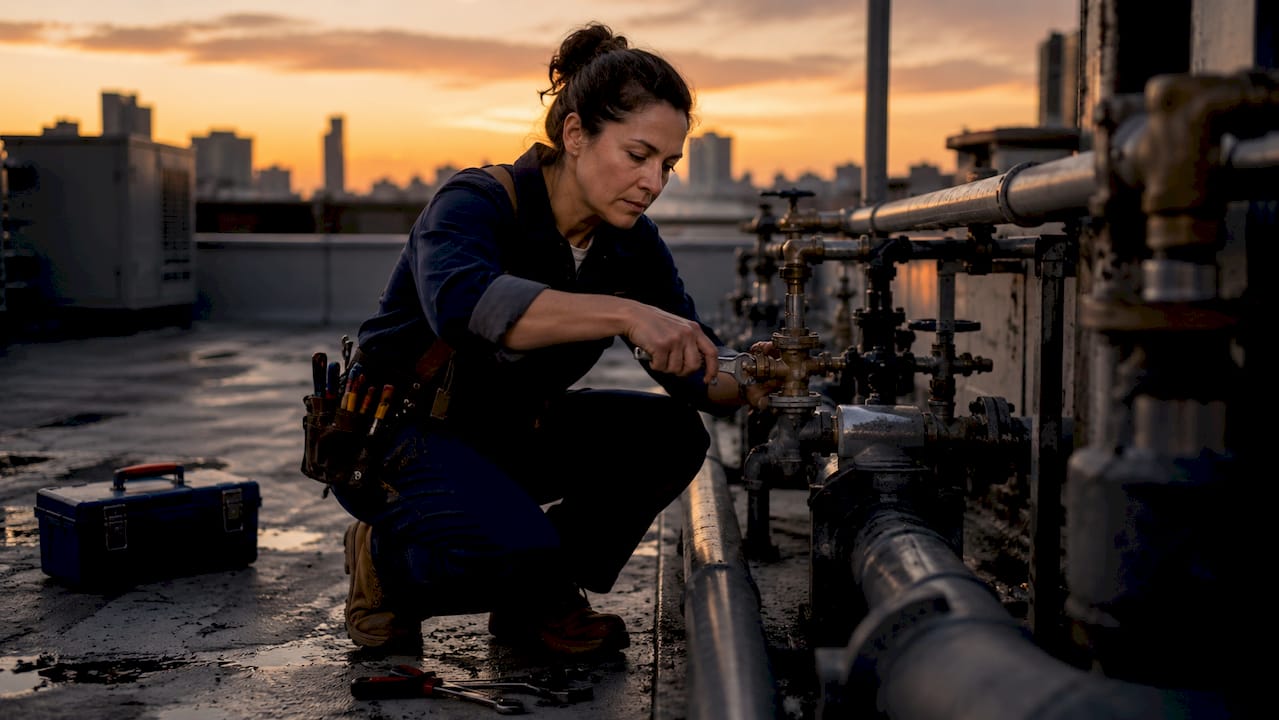
Plumbing specializations fall into two categories: environment-based and function-based. Environment-based roles define where a technician works. Function-based roles define what a technician does within that setting. Most career paths combine both dimensions.
The three core environment-based specializations are:
- Residential plumbers work in single-family homes and apartment buildings. They handle fixture installations, pipe repairs, water heater replacements, and drain clearing. Direct homeowner interaction is constant, so communication skills matter as much as technical ability.
- Commercial plumbers work in office buildings, retail centers, schools, and hospitals. Systems are larger, more complex, and subject to stricter code compliance. Projects often require coordination with general contractors and other trades.
- Industrial plumbers work in factories, processing plants, and manufacturing facilities. They manage high-pressure pipe systems, process water lines, and specialized drainage. Certifications beyond a standard plumbing license are typically required.
Each environment demands different tools, code knowledge, and client interaction styles. A technician moving from new construction to residential service faces a significant skill adjustment, particularly in diagnosing problems quickly under pressure while keeping homeowners calm.
2. What functional roles define plumbing technician roles?
Function-based specializations cut across all three environments. They define the type of work a technician performs day to day.
- Service and repair plumbers respond to breakdowns, leaks, and emergency calls. Speed of diagnosis and the ability to work in unfamiliar systems are core skills.
- Construction plumbers install new systems from blueprints. They work on rough-in plumbing, pipe layout, and system design during building projects. See plumbing construction roles for a detailed breakdown.
- Water supply plumbers specialize in potable water systems, including pressure regulation, filtration, and backflow prevention devices.
- Sanitary plumbers focus on waste removal, sewer lines, and drainage systems. They work with local codes governing waste disposal and venting.
- Medical gas technicians install and maintain oxygen, nitrous oxide, and vacuum lines in healthcare facilities. Medical gas installation requires rigorous certification and commands premium pay due to strict regulatory oversight.
- Fire sprinkler fitters design and install fire suppression systems. This role often requires a separate license and is governed by NFPA standards.
- Backflow prevention specialists test and certify devices that protect potable water from contamination. Many municipalities require annual backflow testing, creating steady recurring work for certified technicians.
Pro Tip: If you prefer structured project work over emergency calls, construction plumbing offers predictable schedules and exposure to full system design. If you prefer variety and problem-solving, service and repair roles build diagnostic speed faster than any other path.
3. How technology is shaping modern plumbing specializations
Digital tools are changing what plumbing technicians need to know. The trade is shifting toward digital systems, remote monitoring, and data analytics as standard parts of the job. Technicians who understand these tools hold a clear advantage in the job market.
Key technology areas now affecting plumbing specializations include:
- Smart shut-off valves that close automatically when sensors detect abnormal flow
- Leak detection systems connected to smartphone apps, allowing remote alerts and monitoring
- IoT-enabled water meters that track usage patterns and flag anomalies in real time
- Building automation integration, where plumbing controls connect to centralized building management systems
Digital literacy in plumbing technology is becoming a critical differentiator in 2026. Technicians who can troubleshoot smart systems earn more and face less competition from generalist labor.
“Technicians who embrace digital plumbing technology and data analytics have better career growth potential and future-proof skills.”
Pro Tip: Pursue manufacturer-specific training on smart plumbing products like leak detection platforms and IoT controls. These credentials are not yet common in the field, which means early adopters stand out immediately to employers.
4. What certifications and skills boost a plumbing technician’s career?
Certifications beyond a basic plumbing license directly increase earning potential and access to higher-stakes work. Advanced certifications such as medical gas, fire sprinkler fitting, and backflow prevention each require separate testing and enable work in regulated environments that generalist plumbers cannot enter.
| Certification | Career Benefit |
|---|---|
| Backflow prevention | Recurring municipal inspection work, steady demand |
| Medical gas (ASSE 6010) | Premium pay, healthcare facility access |
| Fire sprinkler fitting | Separate license, NFPA-regulated projects |
| Water treatment | Potable water system specialization |
| Digital/IoT systems | Future-proof skills, tech-integrated roles |
Physical stamina, spatial reasoning, and the ability to read blueprints are baseline technical skills across all specializations. Customer service and homeowner education are equally critical for residential and service roles. A technician who explains the problem clearly and walks a homeowner through the fix builds trust that leads to repeat business and referrals.
Pro Tip: Pursue at least one specialty certification within your first five years. Backflow prevention is the fastest path to recurring work. Medical gas is the highest-paying entry point for technicians willing to invest in the licensing process.
5. How to choose the right plumbing specialization for your career goals
Choosing a specialization starts with matching personal interests to work environments and daily tasks. The right fit depends on several practical factors:
- Work setting preference: Residential work means daily homeowner interaction. Commercial and industrial roles involve more coordination with project teams and less direct client contact.
- Physical demands: Industrial plumbing often involves confined spaces and high-pressure systems. Residential service work requires frequent travel between job sites.
- Certification investment: Medical gas and fire sprinkler fitting require significant upfront training time and exam fees. Backflow prevention certification is faster to obtain and pays back quickly.
- Career versatility: Experience in both construction and service roles creates well-rounded technicians. Construction builds system design knowledge. Service builds diagnostic speed. Both together produce the most capable and hireable professionals.
- Technology interest: Technicians drawn to digital tools should pursue IoT and smart system training early. This path is growing faster than traditional plumbing segments.
Continuous learning is not optional in this trade. Codes change, technology advances, and new certification categories emerge regularly. Technicians who treat their license as a starting point rather than a finish line advance faster and earn more.
Key takeaways
Plumbing service technician specializations divide into environment-based roles (residential, commercial, industrial) and function-based roles (service, construction, sanitary, water supply, medical gas), and the most career-ready technicians build experience across both dimensions.
| Point | Details |
|---|---|
| Two specialization dimensions | Environment and function define every plumbing career path. |
| Certifications increase earning potential | Medical gas, backflow prevention, and fire sprinkler fitting open higher-paying regulated work. |
| Technology is a differentiator | Digital literacy in IoT and smart systems sets technicians apart in 2026. |
| Dual experience builds versatility | Construction and service experience together produce the most hireable technicians. |
| Soft skills matter in residential roles | Communication and homeowner education are as important as technical ability in service work. |
What I’ve learned watching plumbing careers evolve
The technicians who advance fastest are not always the most technically gifted. They are the ones who treat their specialization as a platform, not a ceiling. I have seen journeymen with backflow certification and basic IoT training outpace peers with more years on the tools simply because they made themselves harder to replace.
The industry still undervalues customer communication as a career skill. Residential service plumbers who can explain a problem clearly, set realistic expectations, and follow up after a job close more repeat business than any marketing effort. That skill is trainable, and most technicians never bother.
My advice to anyone mapping out plumbing career paths right now: spend time in both construction and service before you commit to a single lane. The technicians who understand how systems are built and how they fail are the ones contractors fight to keep. Add one specialty certification every few years, and stay current on digital systems. That combination is as close to job security as this trade offers.
— David
How Petratalent connects contractors with specialized plumbing talent
Finding a plumbing technician with the right certifications and field experience is one of the most common hiring challenges mechanical contractors face.

Petratalent specializes in sourcing and vetting skilled plumbing professionals across service, construction, and leadership roles throughout the United States. The team screens candidates for specific certifications, technical skills, and work history before any placement, so contractors spend less time filtering and more time building their crews. Whether a contractor needs a backflow-certified service technician or a medical gas specialist, Petratalent’s plumbing recruiting services match the right candidate to the right role. Contractors can also explore workforce vetting solutions to understand how Petratalent evaluates candidates before they reach the hiring stage.
FAQ
What is a plumbing service technician?
A plumbing service technician is a licensed trades professional who installs, repairs, and maintains water supply, drainage, and gas systems. Most roles require 2–3 years of field experience and a valid driver’s license.
What are the main types of plumbing jobs by environment?
The three main environment-based types are residential, commercial, and industrial plumbing. Each involves different system scales, code requirements, and client interaction levels.
Which plumbing certifications increase earning potential the most?
Medical gas installation and fire sprinkler fitting certifications command the highest pay due to strict licensing requirements and access to regulated environments. Backflow prevention certification offers fast returns through recurring municipal inspection work.
How does technology affect plumbing technician specializations?
Technicians now troubleshoot smart shut-off valves, IoT-enabled meters, and remote leak detection systems. Digital literacy in these tools is a growing career differentiator in 2026.
Should a plumbing technician specialize in construction or service work?
Experience in both construction and service roles produces the most well-rounded technicians. Construction builds system design knowledge, while service work develops diagnostic speed and client communication skills.
Recommended
Related Posts
October 14, 2026
HVAC Recruiter Fees: Contractors Weigh $10,000 Against Vacancy Costs
See how HVAC recruiter fees work for contractors, from 15% to 25% placement costs to…
October 13, 2026
Recruiting Contract Terms: 10 Checks and Ready to Use Clauses
Define fee triggers, candidate ownership, guarantees, and compliance terms. Get a master agreement, short schedule,…
October 12, 2026
Offer Acceptance Rates: Segment Benchmarks, HVAC’s 3–5 Day SLA
See why a 78% to 82% offer acceptance benchmark can mislead, how role and source…
October 11, 2026
Bad Hires Can Cost Construction Firms 30% to 200% of Salary
Bad hires can cost construction firms 30% to 200% of annual salary. Calculate recruiting, rework,…