




TL;DR:
- Referral hires in plumbing are the most cost-effective and reliable recruitment channel, with higher retention and faster hiring times. They benefit from peer vetting, cultural fit, and ongoing promotion, resulting in lower costs and better long-term workforce stability. Effective programs use split bonuses, multi-channel communication, and ongoing tracking to sustain participation and improve results.
Referral hires are the most cost-effective and reliable recruitment channel in plumbing. Contractors who rely on employee referral programs report 45% of hires coming through this channel, with the lowest turnover rates of any source. Referrals close at 4–8 times the rate of paid job boards, and total cost-per-hire drops by 60–70% because technicians pre-screen candidates before they ever reach your desk. Understanding why referral hires work in plumbing means understanding how peer trust, cultural fit, and motivated referrers combine to solve the skilled trades’ most persistent workforce problem.
How do referral hires compare to traditional hiring methods in plumbing?
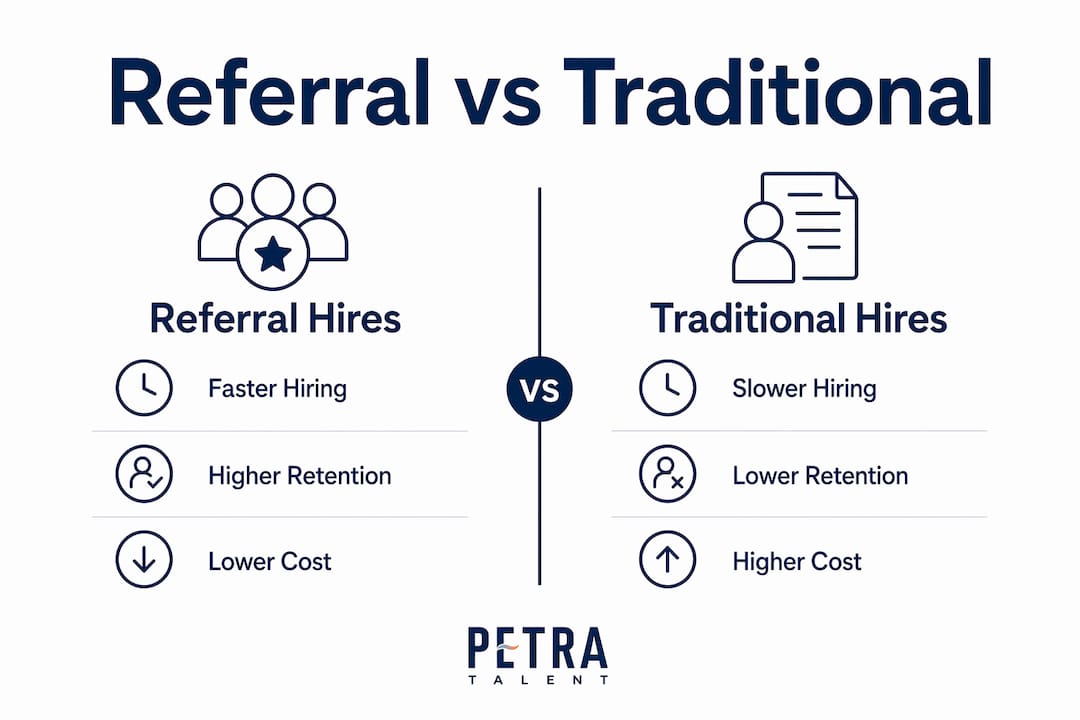
Referral hires outperform job board and agency hires on every measurable dimension. Referred candidates are hired in 29 days on average, compared to 39–55 days for cold applicants. That 55% reduction in time-to-hire matters enormously when a crew is short-handed on a commercial job.
The interview rate gap is equally striking. Referred candidates reach the interview stage at a 40–60% rate, while cold applicants from job boards convert at just 2–3%. That means contractors spend far less time sorting through unqualified resumes and far more time evaluating real candidates.
Retention tells the same story. Referral hires stay at a 45% rate after two years, versus 20% for traditional hires. For a plumbing business, replacing a journeyman costs between $4,500 and $9,000 in recruiting, onboarding, and lost productivity. Referrals cut that cycle significantly.
| Metric | Referral hires | Traditional hires |
|---|---|---|
| Time-to-hire | ~29 days | 39–55 days |
| Interview conversion rate | 40–60% | 2–3% |
| Two-year retention rate | ~45% | ~20% |
| Cost-per-hire reduction | 60–70% lower | Baseline |
Pro Tip: Track your referral hire retention separately from all other sources. Once you see the two-year retention gap in your own data, leadership buy-in for a formal referral program becomes much easier to secure.
What makes referral hires so successful in plumbing companies?
Cultural pre-alignment is the primary reason referral programs outperform every other hiring channel in skilled trades. When a licensed plumber refers a former coworker or apprentice, that referral comes with built-in context. The referrer already knows how the candidate handles pressure, works in tight spaces, and treats customers. That informal vetting eliminates the biggest source of early turnover: culture shock.

Plumbing work is physically demanding and team-dependent. A new hire who does not match the crew’s pace or standards creates friction fast. Referrers self-select candidates who share their work ethic because their own reputation is on the line. This creates a self-policing dynamic that no job board algorithm can replicate.
Employees who refer candidates also become brand ambassadors, which compounds over time. One strong hire refers two more. Those two refer others. The result is a growing pipeline of candidates who already trust the company before they apply. Candidates also trust employee recommendations three times more than company job postings, which means referred candidates arrive with realistic expectations and higher commitment.
Key reasons referral hires succeed in plumbing:
- Peer vetting: Referrers screen for technical competence and work ethic before the candidate ever contacts HR.
- Faster onboarding: Referred hires already understand the company’s culture and expectations through their referrer.
- Lower early turnover: Pre-hire context reduces surprises that cause new hires to quit within 90 days.
- Passive candidate access: Referrals reach skilled plumbers who are not actively searching job boards.
“Referral programs transform employees into ambassadors that build a compounding effect of quality hires and team strength.” — AssessFirst
How to design an effective referral bonus and communication strategy
Bonus structure determines whether a referral program produces quality hires or just quick referrals. The most effective programs offer $500–$2,000 per successful hire, with payments split to align incentives. Paying half at day 30 and half at day 90 ensures the referrer stays invested in the new hire’s success through the critical early period.
Paying the full bonus upfront is the most common mistake. It creates an incentive to refer anyone, not the right person. Some plumbing firms add an annual $2,000 anniversary bonus for each year a referred hire stays. That structure reduces total agency cost from roughly $20,000 to about $7,000 over three years, a significant saving for a mid-size contractor.
Communication is where most referral programs fail. Programs collapse when employees forget they exist. Successful shops keep referral details visible in truck bays, mention open positions in weekly toolbox talks, and send periodic text reminders to the crew. Multi-channel promotion is not optional. It is what separates a program that generates two hires a year from one that generates twenty.
Key referral program design steps:
- Set a bonus range of $500–$2,000 based on role difficulty and market conditions.
- Split payments: 50% at day 30, 50% at day 90.
- Post referral details in high-visibility locations such as truck bays and break rooms.
- Mention open roles in every weekly toolbox talk.
- Send a monthly text or email to all field staff listing current openings and the bonus amount.
- Recognize successful referrers publicly to reinforce participation.
Pro Tip: Name the referral program. A branded program like “Crew Builder” or “Find Your Next Teammate” gets remembered far better than a generic “employee referral bonus.” Named programs generate more consistent participation.
What are practical steps to implement a referral hiring system?
Referral programs should be the first hiring channel contractors activate, not the last. Referrals convert faster than job boards, cost less than agencies, and produce better long-term retention. Building this channel first gives contractors a strong baseline before adding paid sourcing. For a deeper look at structuring the full process, plumbing trade recruitment guides cover how referral hiring fits into a broader workforce plan.
Integrating referrals with other channels matters as the business scales. Training partnerships with local trade schools, apprenticeship programs, and community colleges fill the pipeline with early-career candidates. Referrals then handle experienced journeyman and lead plumber roles where cultural fit and technical competence are non-negotiable.
Tracking is what sustains the program. Contractors should monitor three KPIs monthly: number of referral hires, 90-day retention rate for referral hires, and time-to-fill for referred roles versus all other sources. Those three numbers tell you whether the program is working and where to adjust.
| Implementation phase | Action | Timeline |
|---|---|---|
| Launch | Define bonus structure and announce program to all staff | Week 1 |
| Promote | Post in truck bays, toolbox talks, and group texts | Week 2 |
| Track | Log referral source for every new hire in your ATS | Week 3 |
| Review | Analyze retention and time-to-fill by source quarterly | Month 3 |
| Scale | Add training partnerships and local sourcing once referral pipeline is active | Month 4+ |
Referral programs also reduce dependence on staffing agencies, which typically charge 15–25% of a hire’s first-year salary. For a specialized HVAC recruiter or plumbing firm, redirecting even a portion of that spend into referral bonuses produces a measurable return.
Key Takeaways
Referral hires outperform every other recruitment channel in plumbing because peer vetting, cultural pre-alignment, and split bonus structures combine to produce faster hiring, lower costs, and significantly better two-year retention.
| Point | Details |
|---|---|
| Speed advantage | Referred candidates are hired in ~29 days versus 39–55 days for cold applicants. |
| Retention gap | Referral hires stay at a 45% rate after two years, compared to 20% for traditional hires. |
| Cost savings | Referral programs cut cost-per-hire by 60–70% by eliminating agency fees and reducing washout. |
| Bonus structure | Split payments at day 30 and day 90 align referrer incentives with new hire retention. |
| Program visibility | Consistent promotion through truck bays, toolbox talks, and texts keeps participation high. |
What I have seen after years of watching referral programs succeed and fail
The contractors who get the most from referral hiring treat it as an ongoing system, not a one-time announcement. I have watched shops launch a referral bonus, post it once on the break room wall, and wonder why no one participates six months later. The program did not fail. The communication did.
The split bonus structure is the single most underused tactic in the trades. Paying the full amount upfront feels generous, but it produces a flood of low-quality referrals. Splitting the payment forces the referrer to stay engaged with the new hire through the first 90 days. That informal mentorship is worth more than the bonus itself.
Referral hires also stabilize crews in ways that are hard to quantify but easy to feel. When a team is built partly through trusted referrals, the culture reinforces itself. New hires arrive knowing what is expected. Veteran technicians feel ownership over the team’s quality. Leadership buy-in accelerates everything. When owners and field supervisors actively mention open roles and celebrate referral hires, participation rates climb fast.
— David
How Petratalent supports plumbing businesses with referral-ready hiring
Plumbing contractors who want to reduce hiring costs and improve workforce stability need more than a job posting strategy. Petratalent specializes in plumbing recruiting services that combine direct hire placements, technical vetting, and workforce consultation to help contractors build stronger teams.

Petratalent’s approach includes role-specific candidate sourcing, performance screening, and market wage insights that complement an internal referral program. Contractors working with Petratalent reduce their reliance on costly staffing agencies while building a more stable, qualified workforce. Whether you are filling a journeyman role or searching for a field supervisor, Petratalent’s full recruiting solutions are built for the specific demands of the plumbing industry.
FAQ
Why do referral hires have better retention in plumbing?
Referred candidates arrive with realistic expectations set by the referrer, which reduces early turnover. Retention rates for referral hires reach 45% after two years, compared to 20% for traditional hires.
What is the right referral bonus amount for a plumbing company?
Effective programs offer $500–$2,000 per hire, split between day 30 and day 90 to align incentives with retention rather than quick referrals.
How do referral programs reduce hiring costs in plumbing?
Referral hires cost 60–70% less than job board or agency hires because technicians pre-screen candidates, eliminating most of the sourcing and washout costs.
How often should a plumbing company promote its referral program?
Programs need consistent, multi-channel promotion to stay effective. Posting in truck bays, mentioning openings in weekly toolbox talks, and sending monthly texts to field staff are the three most reliable methods.
Can referral programs reach candidates who are not job searching?
Referrals access passive candidates who are not active on job boards. Candidates trust employee recommendations three times more than company job postings, making referrals the most credible outreach channel available.
Recommended
Related Posts

October 14, 2026
HVAC Recruiter Fees: Contractors Weigh $10,000 Against Vacancy Costs
See how HVAC recruiter fees work for contractors, from 15% to 25% placement costs to…

October 13, 2026
Recruiting Contract Terms: 10 Checks and Ready to Use Clauses
Define fee triggers, candidate ownership, guarantees, and compliance terms. Get a master agreement, short schedule,…

October 12, 2026
Offer Acceptance Rates: Segment Benchmarks, HVAC’s 3–5 Day SLA
See why a 78% to 82% offer acceptance benchmark can mislead, how role and source…

October 11, 2026
Bad Hires Can Cost Construction Firms 30% to 200% of Salary
Bad hires can cost construction firms 30% to 200% of annual salary. Calculate recruiting, rework,…