



TL;DR:
- Recruiting multi-trade mechanical workers requires assessing cross-system troubleshooting skills and relevant certifications. Early union engagement and specialized recruitment speed up hiring and improve workforce reliability. Prioritizing jobsite readiness and retention strategies reduces turnover and ensures project success.
Recruiting multi-trade mechanical workers means hiring skilled professionals who can perform across several mechanical disciplines, including HVAC, plumbing, pipefitting, and controls, on a single project. These workers are formally known as multi-craft technicians in the construction industry. Their versatility reduces crew size, tightens scheduling, and keeps complex mechanical projects on budget. For mechanical contractors managing HVAC and plumbing scopes simultaneously, finding and vetting these workers is one of the most consequential hiring decisions you will make.
What qualifications should you look for when recruiting multi-trade mechanical workers?
The baseline for a qualified multi-craft technician is 3–7 years of field experience combined with relevant trade certifications. That experience range reflects the time needed to develop competency across mechanical, electrical, and pneumatic systems, not just one discipline.
Contractors should screen for the following qualifications:
- Trade certifications and licenses: ITI certification, state mechanical licenses, and EPA 608 for refrigerant handling are standard minimums for HVAC and plumbing roles.
- Blueprint and schematic proficiency: Candidates must read and interpret mechanical drawings without supervision. This skill separates field-ready workers from those who need constant direction.
- Physical capacity: Standard requirements include the ability to lift 50 lbs and work in confined spaces, at heights, and in variable temperatures.
- Cross-system troubleshooting: The defining skill of a multi-craft technician is diagnosing problems across systems. Ask candidates to walk through a real troubleshooting scenario during screening.
- Safety credentials: OSHA 10 or OSHA 30 certification signals that a candidate understands jobsite safety protocols, not just technical tasks.
Compensation reflects the skill premium these workers command. Market pay for multi-skilled technicians in the US reaches $42.50/hr, often with full benefits packages. Contractors who underprice these roles lose candidates to better-funded competitors before the interview stage. Knowing the top qualities of HVAC technicians helps hiring managers set the right bar from the start.
Pro Tip: Ask candidates to describe a time they diagnosed a failure across two different systems. Their answer reveals cross-trade depth faster than any certification check.
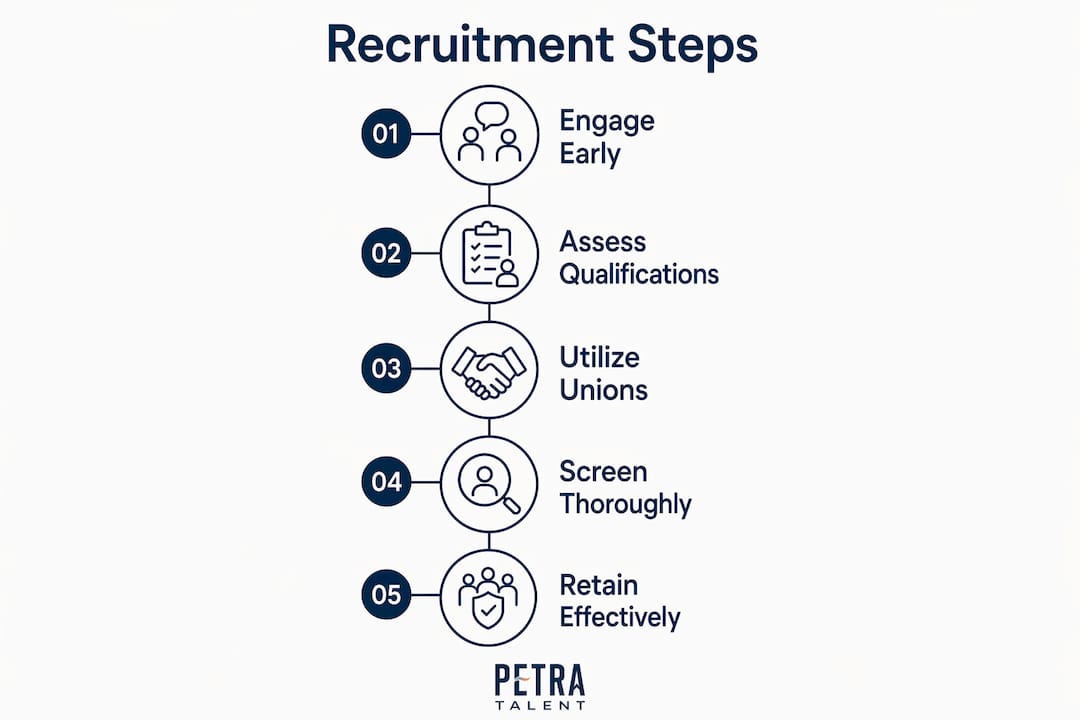
How do union apprenticeships build a reliable hiring pipeline?
Union apprenticeship programs are the most reliable source of jobsite-ready multi-craft workers. They produce workers who arrive with standardized safety training, documentation habits, and team integration skills already in place. That consistency reduces onboarding time on complex mechanical projects.
“Workers trained through union apprenticeships arrive jobsite-ready with standardized safety protocols, reducing onboarding time and risks. Union-trained workers consistently meet safety and documentation standards critical for complex mechanical projects.”
The strategic advantage goes beyond individual hires. Pre-construction partnerships with unions established 12–18 months before a project start date critically reduce last-minute staffing delays and costs. Contractors who wait until a project is mobilizing to engage union halls face longer wait times and fewer qualified candidates.
Front-door initiatives that coordinate union referrals reduce recruitment burden and improve workforce readiness for large projects. These programs match apprenticeship graduates with contractor needs before peak hiring phases hit. The result is a pre-qualified pool of workers aligned to your project timeline, not a reactive scramble.
The financial case is documented. A 2024 data center project that hired 450 skilled workers 35% ahead of schedule reduced downtime by 18 days and saved $4.7M. That outcome was driven by early union engagement and workforce planning, not last-minute job postings.
Pro Tip: Contact your regional building trades council at least 12 months before project mobilization. Early engagement gives you first access to graduating apprentices and priority referral status.
What are the best channels and screening methods to find qualified candidates?
Sourcing multi-craft technicians requires channels built for the trades, not general labor markets. The most productive sources are union referral halls, trade-specific job boards, and specialized recruitment partners with pre-qualified candidate pools.

Specialized recruiters achieve 30–50% faster time-to-fill rates by maintaining pools of pre-vetted multi-trade candidates. Hiring an Electrical Superintendent through general methods takes 45–75 days. A specialized recruiter cuts that to 23–38 days. That difference directly affects project start dates.
A structured screening process should follow this sequence:
- Verify trade licenses and certifications before scheduling any interview. Unverified credentials waste time for both parties.
- Conduct a technical skills assessment focused on cross-system troubleshooting. Use scenario-based questions tied to the specific mechanical systems on your project.
- Check safety credentials including OSHA certification and any project-specific safety training requirements.
- Assess jobsite readiness by evaluating communication skills, shift flexibility, and prior experience with similar project environments.
- Match to project phase and timeline. Recruitment success depends on aligning candidate availability with project phases, not just filling a headcount number.
The table below outlines the primary sourcing channels and their best use cases:
| Channel | Best Use Case |
|---|---|
| Union referral halls | Pre-qualified, safety-trained workers for large commercial projects |
| Trade-specific job boards | Active candidates seeking multi-trade worker jobs in specific regions |
| Specialized recruitment partners | Fast fills for technical roles requiring pre-screening and vetting |
| Apprenticeship program graduates | Entry-level multi-craft hires with strong safety foundations |
| Internal referrals from current crew | Culture-fit candidates with verified field performance |
Blending permanent hires with project-based placements gives contractors the flexibility to scale up for peak phases without carrying excess labor costs year-round. Screening methods that verify trade skills upfront improve hire quality and reduce turnover across both hire types. Contractors managing plumbing scopes specifically can benefit from working with a plumbing staffing agency that maintains active candidate pools.
How do you avoid common mistakes and retain the workers you hire?
The most common mistake contractors make is engaging unions or recruiters too late. By the time a project is awarded and mobilization begins, the best multi-craft workers are already committed elsewhere. Late engagement forces contractors to accept less-qualified candidates or pay premium rates for last-minute placements.
Additional pitfalls to avoid:
- Prioritizing certifications over jobsite readiness. A candidate with every license but poor communication skills will slow your crew. Assessing jobsite readiness includes evaluating communication, safety culture adoption, and team integration, which often predict success better than paper credentials.
- Mismatching workers to project demands. A technician skilled in light commercial HVAC is not automatically ready for a large-scale industrial plumbing scope. Match technical background to the specific systems on your project.
- Neglecting career development. Workers who see no path forward leave. Offering cross-training opportunities, mentorship from senior technicians, and clear advancement criteria keeps your best people engaged.
- Ignoring safety culture fit. Workers who do not share your safety standards create liability. Screen for safety culture alignment the same way you screen for technical skills.
Retention starts at the offer stage. Competitive pay, clear project timelines, and honest communication about working conditions reduce early turnover. Contractors who address common HVAC recruitment challenges proactively build crews that stay through project completion.
Pro Tip: Conduct a 30-day check-in with every new hire. Ask directly what is working and what is not. Workers who feel heard in the first month stay significantly longer.
Key Takeaways
The most effective way to recruit multi-trade mechanical workers combines early union engagement, structured technical screening, and retention practices that start at the offer stage.
| Point | Details |
|---|---|
| Start union outreach early | Engage union halls 12–18 months before project mobilization to secure the best candidates. |
| Screen for cross-system skills | Verify troubleshooting ability across mechanical, electrical, and pneumatic systems, not just certifications. |
| Use specialized recruiters | Specialized partners fill multi-craft roles 30–50% faster than general hiring methods. |
| Match candidates to project phase | Align worker availability and shift preferences with specific project timelines for better retention. |
| Invest in retention from day one | Competitive pay, clear advancement paths, and 30-day check-ins reduce early turnover significantly. |
What I have learned from years of mechanical trades recruiting
The contractors who consistently build strong multi-craft crews share one habit: they treat recruitment as a project management function, not an HR task. They plan workforce needs the same way they plan material procurement. That mindset shift changes everything.
What I have also observed is that the best multi-trade hires are rarely the ones with the longest certification list. They are the workers who can walk onto a jobsite, read the room, communicate clearly with other trades, and start contributing on day one. Union apprenticeship programs produce that profile more reliably than any other pipeline I have seen. The combination of technical training, safety culture, and team-based learning creates workers who are genuinely ready for complex mechanical environments.
The practical advice I give every hiring manager is this: stop waiting for the perfect candidate and start building the pipeline that produces them. That means union partnerships, early engagement, and structured vetting, not reactive job postings when a project is already behind.
— David
How Petratalent supports mechanical contractors with skilled trades hiring
Mechanical contractors who need to hire multi-craft technicians for HVAC and plumbing projects face a tight labor market and a short window to staff up correctly. Petratalent specializes in exactly this challenge.
Petratalent’s HVAC and plumbing recruiting services include role-specific candidate sourcing, technical vetting, market wage benchmarking, and workforce compliance support. The team maintains pre-qualified candidate pools for mechanical roles across the United States, reducing time-to-fill for critical positions. Contractors can also access technical vetting and workforce solutions designed to match candidates to specific project scopes and timelines. If your next project requires dependable multi-craft technicians, Petratalent is built to deliver them.
FAQ
What is a multi-trade mechanical worker?
A multi-trade mechanical worker, formally called a multi-craft technician, is a skilled professional trained to work across several mechanical disciplines such as HVAC, plumbing, pipefitting, and controls. Their cross-system capability makes them especially valuable on complex commercial and industrial projects.
How many years of experience should a multi-craft technician have?
Standard qualification requirements call for 3–7 years of field experience along with relevant trade certifications such as ITI and state mechanical licenses. Less experience is acceptable for apprenticeship-track hires supported by union training programs.
How early should contractors engage union apprenticeship programs?
Contractors should initiate contact with union halls and apprenticeship programs 12–18 months before project mobilization. Early engagement secures priority access to graduating apprentices and reduces last-minute staffing costs.
What is the fastest way to fill multi-trade mechanical roles?
Specialized recruitment partners with pre-qualified candidate pools fill multi-craft roles 30–50% faster than general hiring methods. Combining specialized recruiters with union referrals produces the fastest and most reliable results.
What screening factor predicts multi-craft hire success most accurately?
Jobsite readiness, including communication skills, safety culture fit, and team integration ability, predicts long-term success more reliably than certifications alone. Technical credentials confirm baseline competency, but soft skills determine whether a worker performs well under real project conditions.
Recommended
Related Posts

September 20, 2026
Construction Offer Letters for HR: Site Assignments, Certs, Petra Tips
HR ready construction offer letters: copy ready language for site assignments, certs, contingencies, and a…

September 19, 2026
Create E-Verify Cases by Day Three: U.S. HVAC & Plumbing Rules
E-Verify for U.S. HVAC and plumbing contractors: who needs I-9s, the three business day case…

September 18, 2026
72.5¢ Rate: Take Home Vehicle Policy for Employers and Agencies
Checklist and policy language for employers and agencies: apply the IRS 2026 mileage rate (72.5…

September 17, 2026
Avoid Overtime Back-Pay: Job-to-Job Travel Pay for U.S. Technicians
U.S. employers: learn DOL/WHD travel-pay tests, a blended rate overtime example, state pitfalls, and Petratalent…