


For contractors and recruiting teams who need a fast, practical answer: the top applicant tracking systems for contractors in 2026 are Greenhouse (structured hiring workflows), Workable (ease of use and job distribution), iCIMS (enterprise scale and compliance), Rippling (payroll/HRIS integration), and Breezy HR (fast setup for smaller shops). For hard-to-fill technical and leadership roles in HVAC and plumbing, Petratalent is the recommended agency alternative to software, offering direct-hire placement, technical vetting, and workforce consultation that no ATS can replicate on its own.
When software is the right call: your team posts frequently, manages high applicant volume, and has internal HR capacity to run the pipeline. When an agency is the right call: you need a licensed HVAC technician or plumbing superintendent filled in under 30 days, your last three hires churned within six months, or the role requires trade-specific vetting that a generic screening form cannot catch.
Quick shortlist:
- Petratalent — Best for direct-hire and hard-to-fill leadership or technical roles in HVAC and plumbing; agency-managed vetting replaces the ATS workflow entirely
- Greenhouse — Best for structured interview plans and stage-based hiring analytics
- Workable — Best for straightforward posting, screening, and interview scheduling without a steep learning curve
- iCIMS — Best for large contractor organizations needing enterprise integrations and OFCCP compliance reporting
- Rippling — Best for contractors who want payroll, HRIS, and hiring in one connected system
Table of Contents
- Which ATS fits your contractor operation at a glance?
- How we evaluated these contractor hiring systems
- Full reviews of the top ATS options for contractor hiring
- What does ATS pricing actually cost for a contractor program?
- How do you choose the right ATS for your contractor operation?
- When should you use an ATS vs. hire a specialized recruitment agency?
- Key Takeaways
- A contractor hiring specialist’s perspective on what actually matters
- Petratalent: the agency alternative for HVAC and plumbing contractors
- Useful sources and further reading
Which ATS fits your contractor operation at a glance?
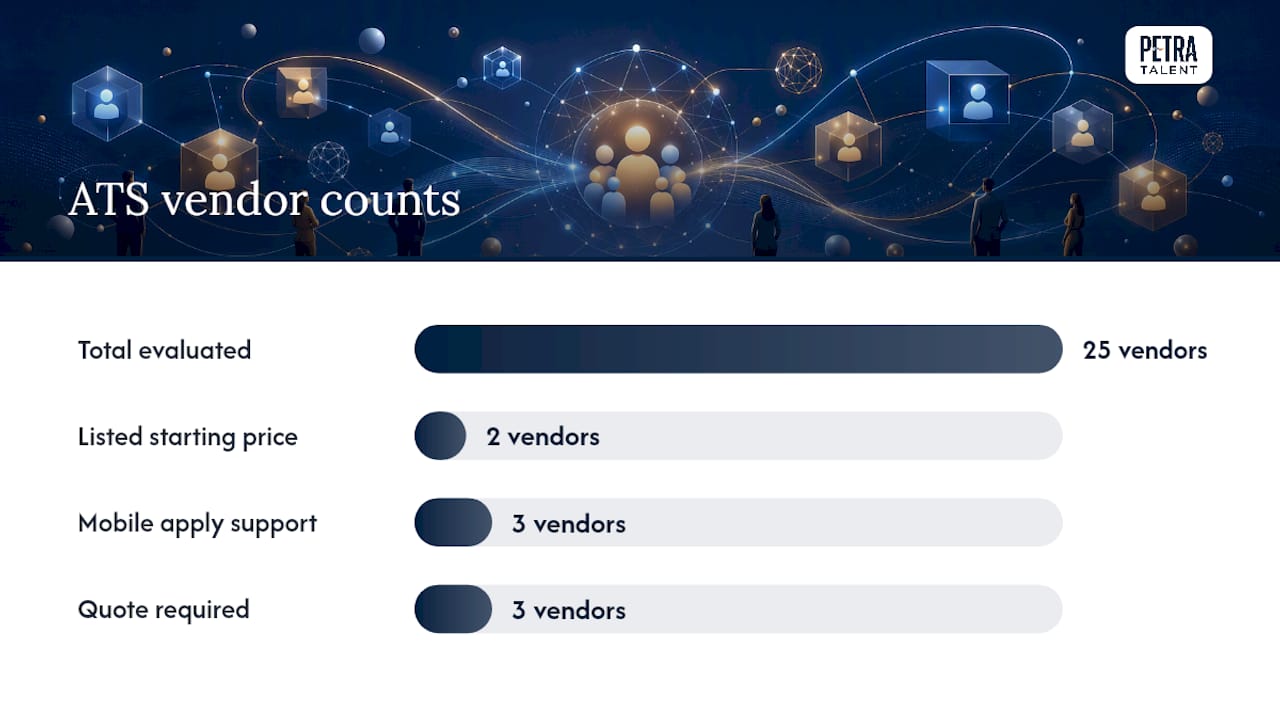
The table below covers all 25 options evaluated in this guide. Pricing reflects publicly listed starting points where available; vendors marked “Quote required” do not publish rates.
| ATS / Option | Best For | Starting Price | Standout Feature | Ideal Company Size | Contractor Feature Flag |
|---|---|---|---|---|---|
| Petratalent | Direct-hire, leadership & technical roles (HVAC/plumbing) | Contingency fee (quote) | Industry-specific vetting + hands-on placement | Any size contractor | Yes — technical screening, compliance support |
| Greenhouse | Structured hiring & analytics | Quote required | Interview orchestration & stage analytics | Mid-market to enterprise | Partial — custom fields; no native cert tracking |
| Lever | ATS + CRM for proactive sourcing | Quote required | Candidate relationship management | Mid-market | Partial — CRM pipeline; limited contractor fields |
| Workable | Easy posting, screening, scheduling | ~$157/mo | Multi-board job distribution | SMB to mid-market | Partial — mobile apply; no 1099 module |
| Breezy HR | Fast setup, SMB automation | ~$157/mo | Drag-and-drop pipelines + automation | Small to mid-size | Partial — automation templates; limited cert fields |
| BambooHR | HRIS + ATS bundle for small businesses | — | Candidate-to-HR-record onboarding | Small business | Partial — HRIS carry-through; no 1099 native |
| JazzHR | Affordable SMB recruiting | — | Simple job posting automation | Small shops | Partial — basic workflows; no cert tracking |
| iCIMS | Enterprise scale + compliance | Quote required | Robust integrations + enterprise reporting | Large enterprise | Yes — compliance reporting, integration library |
| Jobvite | Employer branding + sourcing | Quote required | Sourcing and candidate engagement | Mid-market to enterprise | Partial — CRM sourcing; limited contractor fields |
| Zoho Recruit | Zoho ecosystem integration | ~$30/user/mo | Zoho app suite integration | SMB to mid-market | Partial — custom fields available |
| Rippling | Payroll/HRIS + hiring in one system | ~$8/user/mo (base) | Tight payroll and employee record integration | SMB to enterprise | Yes — payroll integration; onboarding flows |
| SmartRecruiters | Enterprise marketplace approach | Quote required | Marketplace integrations + enterprise workflows | Large enterprise | Partial — marketplace add-ons |
| Gem | Proactive sourcing + pipeline CRM | Quote required | Sourcing and talent pipeline automation | Mid-market to enterprise | Partial — pipeline CRM; no native contractor fields |
| Pinpoint | Structured hiring + customization | ~$600/mo | Customizable candidate workflows | Mid-market | Partial — custom workflows |
| Ashby | Analytics-first recruiting | ~$300/mo | Recruiting analytics and reporting | Growing teams | Partial — strong analytics; limited contractor fields |
| Workday Recruiting | Unified HCM for large enterprises | Quote required | Deep HCM integration | Large enterprise | Partial — HCM integration; limited field-hire features |
| Teamtailor | Employer branding + automation | ~$150/mo | Employer branding and automation ease | SMB to mid-market | Partial — automation; limited cert tracking |
| Manatal | AI-assisted sourcing + scoring | ~$15/user/mo | Built-in AI candidate suggestions | SMB to mid-market | Partial — AI scoring; limited contractor fields |
| Recruitee | Collaborative pipelines + templates | ~$199/mo | Collaboration and role templates | Growing teams | Partial — role templates; no 1099 native |
| Loxo | Search + CRM sourcing | Quote required | Search and sourcing capabilities | Mid-market | Partial — sourcing CRM |
| TE Recruit | Region-specific hiring needs | Quote required | Localized recruiting features | Niche/regional | Partial — region-specific |
| Deel HR | Global contractor payroll + onboarding | ~$20/contractor/mo | Global contractor payroll + EOR features | Any size, global | Yes — 1099/contractor payments, compliance |
| Recooty | No-frills ATS for small teams | ~$30/mo | Simple posting and tracking | Small business | Partial — basic tracking |
| ClearCo | Verify fit during vendor discovery | Quote required | Verify during vendor discovery | Verify with vendor | Verify with vendor |
| Factorial | HRIS-first with recruiting modules | ~$5/user/mo | HRIS integration + modular approach | Small to growing | Partial — HRIS modules; limited contractor fields |
Contractor feature notes:
- Mobile apply matters most for field-hire conversion. Construction recruiting guides consistently flag that workers apply from phones on job sites, not desktops. Workable, Breezy HR, and iCIMS all support mobile-optimized apply flows.
Statistic callout: According to G2’s ATS category data, ease of use and quality of support are the two most frequently cited factors in user reviews of applicant tracking systems, ahead of feature depth alone.
How we evaluated these contractor hiring systems
Every option in this guide was assessed against a weighted scoring framework built around contractor hiring realities, not generic office recruiting. The evaluation drew on vendor documentation, product demos, G2 and Capterra user reviews, and cross-referenced against TechnologyAdvice’s comparative ATS testing of 12 platforms.
Scoring criteria, in order of weight:
- Compliance features — Does it support EEOC/OFCCP reporting, E-Verify, digital I-9s, and background-check integrations for federal and state contractor requirements?
- AI screening — Does the platform use AI for candidate ranking or screening, and does the vendor provide transparency on training data and bias controls? (See the MIT Sloan explainer on machine learning for why vendor AI claims require scrutiny.)
Data sources and limits: Pricing figures reflect publicly listed rates at time of writing and change frequently. Always verify current pricing directly with the vendor. G2 and Capterra ratings reflect aggregated user sentiment and should be read for patterns across multiple reviews, not single data points. Vendor “best for” labels from third-party roundups often reflect general hiring volume, not contractor-specific workflows; verify mobile apply conversion and certification field configuration during your own demo.
Full reviews of the top ATS options for contractor hiring
Petratalent
Best for: Direct-hire and hard-to-fill leadership or technical roles in HVAC and plumbing.
Petratalent is not an ATS. It is a specialized recruitment agency that replaces the ATS workflow for contractors who cannot afford a slow or failed hire. The service covers role-specific candidate sourcing, technical vetting and screening, market wage benchmarking, and workforce compliance support. For a mechanical contractor trying to fill a plumbing superintendent or HVAC service manager role, Petratalent’s industry-focused process delivers pre-screened candidates rather than a raw applicant pool.
Pros for contractor hiring: No internal HR overhead required; candidates arrive already vetted for trade certifications and experience; direct-hire placement with contingency pricing means no fee unless a hire is made.
Cons: Not a self-serve software tool; not suited for high-volume, repetitive hiring where internal teams want to own the pipeline.
Contractor-fit note: For HVAC and plumbing contractors, the gap between a general ATS and a specialized recruiter is widest at the leadership and technical-specialist level. An ATS surfaces applicants; Petratalent surfaces the right ones.
Greenhouse
Best for: Structured interview plans and stage-based hiring analytics.
Greenhouse is one of the most widely deployed ATS platforms in mid-market and enterprise companies. Its core strength is interview orchestration: structured scorecards, stage-by-stage candidate tracking, and hiring-manager collaboration tools that reduce inconsistency across interviewers. For contractor organizations with dedicated HR teams, Greenhouse provides the process discipline that prevents ad-hoc hiring decisions.
Pros: Strong interview workflow, detailed analytics, large integration library (background checks, HRIS, payroll), and a well-documented API.
Cons: Pricing is not publicly listed and tends toward the higher end for smaller shops. Contractor-specific features like certification tracking require custom field configuration. Mobile apply experience is functional but not optimized for field-hire conversion.
Contractor-fit note: Best suited to general contractors or construction firms with an HR team of two or more. Review sites tag Greenhouse highly for onboarding support and structured hiring, though some users note the setup timeline can run four to eight weeks for full configuration.
Lever
Best for: Teams that want an integrated ATS and CRM for proactive sourcing.
Lever combines a traditional applicant tracking workflow with candidate relationship management in a single interface. Recruiters can nurture passive candidates, track outreach history, and move prospects into active pipelines without switching tools. For contractor organizations that recruit from trade schools, union halls, or referral networks, the CRM layer helps maintain relationships between hiring cycles.
Pros: Unified ATS + CRM, strong sourcing workflows, good integration with LinkedIn and job boards.
Cons: Pricing requires a quote; contractor-specific fields need custom configuration. The CRM depth can feel like more than a small contractor shop needs.
Contractor-fit note: A solid choice for mid-size general contractors with a dedicated recruiter who wants to build a candidate pipeline rather than react to each open role.
Workable
Best for: Straightforward posting, screening, and interview scheduling without a steep learning curve.
Workable is the most accessible general-purpose ATS for teams that want to get live quickly. It distributes job postings to over 200 job boards simultaneously, includes AI-assisted candidate suggestions, and provides a clean mobile interface for hiring managers. It is one of the few platforms that publishes pricing openly.
Pros: Fast setup (often under a week), multi-board distribution, mobile-friendly apply flow, transparent pricing.
Cons: Limited contractor-specific features; no native 1099 module; certification tracking requires workarounds.
Contractor-fit note: Works well for a contractor’s office manager who needs to post field technician roles and manage applicants without a complex HR system. Capterra users frequently cite Workable’s ease of use as its primary differentiator.
Breezy HR
Best for: Small to mid-size teams that want rapid implementation and automation templates.
Breezy HR uses a visual, drag-and-drop pipeline that most hiring managers can configure without IT support. Automation templates handle candidate stage transitions, email follow-ups, and interview scheduling. For a contractor shop with one office manager handling recruiting alongside other duties, Breezy HR reduces the manual workload significantly.
Pros: Fast implementation, visual pipeline, built-in automation, starting price around $157 per month.
Cons: Certification and license tracking are not native; the platform is not built for high-volume or multi-site contractor programs.
Contractor-fit note: A practical starting point for a plumbing or HVAC company posting five to fifteen roles per year that wants more structure than a spreadsheet but does not need enterprise features.
BambooHR
Best for: Companies seeking HRIS and ATS bundled for employee lifecycle management.
BambooHR’s ATS is a module within a broader HRIS platform. Its main advantage is that candidates hired through the ATS flow directly into employee records, onboarding checklists, and HR data without re-entry. For small contractors who want one system from application to payroll, that continuity has real operational value.
Pros: HRIS integration, clean onboarding flow, time-off and HR records in one place.
Cons: The ATS module is less feature-rich than standalone platforms; no native 1099 or contractor classification support; pricing for the full HRIS suite adds up quickly.
Contractor-fit note: Best for a small contractor (under 50 employees) that wants to consolidate HR and recruiting in one tool rather than maximize recruiting capability.
JazzHR
Best for: Small contractor shops that need affordable ATS features.
JazzHR is among the more affordable options on this list. It covers job posting, basic applicant tracking, and simple workflow automation. The feature set is intentionally lean, which means setup is fast and the learning curve is minimal.
Pros: Low starting price, simple interface, fast to deploy.
Cons: Limited reporting, no contractor-specific features, and the integration library is narrower than mid-market platforms.
Contractor-fit note: A reasonable entry point for a one-person HR operation at a small plumbing or HVAC company that is moving off spreadsheets for the first time.
iCIMS
Best for: Large contractor organizations needing enterprise integrations and compliance reporting.
iCIMS is a full talent platform built for enterprise scale. Its integration library covers background-check providers, payroll systems, HRIS platforms, and workforce management tools. For federal contractors subject to OFCCP nondiscrimination and affirmative action requirements, iCIMS provides the audit trail and reporting infrastructure that smaller platforms cannot match.
Pros: Deep integration library, strong compliance reporting, scalable for multi-site and multi-state programs, configurable for contractor-specific fields.
Cons: Pricing requires a quote and is typically enterprise-level. Implementation timelines run eight to sixteen weeks for full configuration.
Contractor-fit note: The right choice for a large general contractor or mechanical contractor with 200-plus employees, multi-state operations, and federal contract obligations. Review sites note strong customer success support but a steeper onboarding curve.
Jobvite
Best for: Mid-market to enterprise teams focused on employer branding and sourcing.
Jobvite combines ATS functionality with sourcing tools and candidate engagement features. Its employer branding capabilities help contractors build a careers page that reflects their company culture, which matters when competing for skilled tradespeople who have multiple offers.
Pros: Sourcing and CRM features, employer branding tools, scalable for growing organizations.
Cons: Pricing requires a quote; contractor-specific features are limited without custom configuration.
Contractor-fit note: Useful for a mid-size contractor that wants to invest in employer brand alongside applicant tracking, particularly if competing for talent in tight labor markets.
Zoho Recruit
Best for: Companies already using Zoho apps that want an integrated recruiting tool.
Zoho Recruit connects natively with Zoho CRM, Zoho People, and other Zoho products. Starting at approximately $30 per user per month, it is affordable for teams already in the Zoho ecosystem. Custom fields can be configured for contractor-specific data, though this requires manual setup.
Pros: Zoho ecosystem integration, affordable pricing, customizable fields.
Cons: Outside the Zoho ecosystem, the integration library is narrower. Contractor-specific workflows require configuration effort.
Contractor-fit note: A practical choice only if the contractor’s business already runs on Zoho tools. Otherwise, other platforms offer better out-of-the-box contractor fit.
Rippling
Best for: Contractors who want payroll, HRIS, and hiring in one connected system.
Rippling’s platform connects hiring, onboarding, payroll, and benefits in a single workflow. When a candidate accepts an offer, Rippling can trigger payroll setup, equipment provisioning, and benefits enrollment automatically. For a contractor that hires frequently and wants to eliminate re-entry of employee data across systems, Rippling’s integration depth is a genuine operational advantage.
Pros: Tight payroll and HRIS integration, automated onboarding flows, scalable from small to enterprise.
Cons: The ATS module is less specialized than standalone platforms; contractor-specific features like certification tracking require configuration.
Contractor-fit note: Strong fit for a contractor that prioritizes operational efficiency from hire to payroll over deep sourcing or CRM capability.
SmartRecruiters
Best for: Enterprises that want a marketplace approach and broad scalability.
SmartRecruiters positions itself as a talent acquisition platform with a marketplace of add-on solutions covering sourcing, assessments, background checks, and more. For large contractor organizations that want to assemble a custom hiring tech stack, the marketplace model provides flexibility.
Pros: Marketplace integrations, enterprise workflows, strong candidate experience features.
Cons: Pricing requires a quote; the marketplace model means costs can escalate with add-ons.
Contractor-fit note: Best for large general contractors or construction management firms with dedicated recruiting teams and complex, multi-vendor hiring programs.
Gem
Best for: Teams that prioritize sourcing and passive candidate outreach.
Gem is a recruiting CRM, not a full ATS. It excels at building talent pipelines, automating outreach sequences, and tracking engagement with passive candidates. For contractors trying to build a bench of pre-qualified technicians before roles open, Gem’s pipeline automation is useful.
Pros: Sourcing automation, pipeline tracking, strong LinkedIn integration.
Cons: Not a standalone ATS; requires pairing with another platform for full hiring workflow. Pricing requires a quote.
Contractor-fit note: A supplemental tool for a contractor with a dedicated sourcing function, not a replacement for a full ATS.
Pinpoint
Best for: Organizations looking for organized hiring workflows and customization.
Pinpoint offers structured hiring workflows with a high degree of customization for candidate stages, application forms, and communication templates. Starting at approximately $600 per month, it targets mid-market teams that want more control over their hiring process than entry-level platforms provide.
Pros: Customizable workflows, structured hiring, good candidate experience features.
Cons: Higher starting price; contractor-specific features require custom configuration.
Contractor-fit note: A reasonable option for a mid-size contractor with a dedicated HR team that wants to build a structured, repeatable hiring process.
Ashby
Best for: Teams that want analytics-first recruiting workflows.
Ashby is built around recruiting data. Its reporting covers pipeline conversion rates, source effectiveness, time-to-fill by role and location, and interviewer performance. For a contractor organization that wants to make data-driven decisions about where to source and how to improve fill rates, Ashby’s analytics depth stands out.
Pros: Strong reporting and analytics, automation features, clean interface.
Cons: Starting price around $300 per month; contractor-specific fields require configuration.
Contractor-fit note: Best for a growing contractor with enough hiring volume to make analytics meaningful, typically 20-plus hires per year.
Workday Recruiting
Best for: Large organizations using Workday HCM that want a unified system.
Workday Recruiting is a module within the Workday Human Capital Management suite. Its primary advantage is deep integration with Workday’s payroll, benefits, and workforce planning tools. For a large contractor already running Workday HCM, adding the recruiting module avoids the integration complexity of a separate ATS.
Pros: Deep HCM integration, enterprise-grade reporting, unified data model.
Cons: Pricing requires a quote and is typically enterprise-level. Implementation is complex and time-consuming. Field-hire features are limited without customization.
Contractor-fit note: Only relevant for large contractors already committed to the Workday ecosystem. Not a practical choice for small or mid-size operations.
Teamtailor
Best for: Companies that want an easy employer-branding experience and automation templates.
Teamtailor combines a careers site builder with ATS functionality and automation templates. Starting at approximately $150 per month, it is accessible for smaller teams. The employer branding focus helps contractors build a professional careers presence without a web developer.
Pros: Employer branding tools, automation templates, accessible pricing.
Cons: Contractor-specific features are limited; certification tracking is not native.
Contractor-fit note: A good fit for a contractor that wants to improve its careers page and automate basic follow-up without investing in a complex platform.
Manatal
Best for: Teams experimenting with AI-assisted sourcing and candidate ranking.
Manatal uses AI to score and rank candidates based on job requirements and profile data. Starting at approximately $15 per user per month, it is one of the most affordable AI-enabled ATS options. As the MIT Sloan machine learning explainer notes, AI screening tools require scrutiny of training data and bias controls before relying on them for hiring decisions.
Pros: AI candidate scoring, affordable pricing, clean interface.
Cons: AI ranking requires validation; contractor-specific fields are limited.
Contractor-fit note: Worth evaluating for a contractor that wants AI-assisted triage on high-volume roles, with the understanding that AI scores should supplement, not replace, human review.
Recruitee
Best for: Growing teams needing collaborative pipelines and role templates.
Recruitee emphasizes hiring team collaboration, allowing multiple stakeholders to review candidates, leave feedback, and move applicants through stages. Role templates speed up job creation for recurring positions. Starting at approximately $199 per month, it targets growing mid-market teams.
Pros: Collaboration features, role templates, clean pipeline interface.
Cons: No native 1099 module; contractor-specific features require configuration.
Contractor-fit note: A practical choice for a contractor with multiple hiring managers across departments who need a shared, organized pipeline.
Loxo
Best for: Sourcing-heavy teams that combine ATS with search and CRM features.
Loxo is a recruiting platform built around search and sourcing, with CRM and ATS functionality layered on top. It is particularly useful for teams that do a significant amount of outbound recruiting rather than relying on inbound applications.
Pros: Strong sourcing and search tools, CRM pipeline, combined ATS workflow.
Cons: Pricing requires a quote; not optimized for high-volume field-hire scenarios.
Contractor-fit note: Best for a contractor with a dedicated recruiter focused on proactive outreach rather than managing inbound applicants.
TE Recruit
Best for: Niche teams with region-specific hiring needs.
TE Recruit serves specific markets and use cases with localized recruiting features. Pricing requires a quote. For contractors operating in specific regional markets where TE Recruit has established presence, it may offer relevant local integrations.
Contractor-fit note: Verify regional availability and specific feature set directly with the vendor before evaluating further.
Deel HR
Best for: Companies hiring international contractors who need payroll and compliance support.
Deel HR handles global contractor payments, 1099 and international compliance, and contractor onboarding workflows. Starting at approximately $20 per contractor per month, it is the most direct solution for contractors who hire internationally or need a compliant 1099 payment infrastructure.
Pros: Native 1099 and contractor payment workflows, global compliance, EOR-like features.
Cons: Not a full ATS; sourcing and pipeline management require a separate tool.
Contractor-fit note: The right choice for a U.S. contractor that also engages international subcontractors or needs a compliant contractor payment system alongside its hiring workflow.
Recooty
Best for: Small businesses that need a no-frills ATS.
Recooty is a lightweight ATS starting at approximately $30 per month. It covers basic job posting, applicant tracking, and candidate management. The feature set is intentionally simple, which makes it fast to set up and easy to use for a small team.
Contractor-fit note: A reasonable starting point for a very small contractor shop that needs basic applicant tracking and nothing more.
ClearCo
ClearCo appears in aggregate vendor lists for recruiting and HR products. Specific features, pricing, and contractor fit require direct verification with the vendor. Do not shortlist ClearCo without a discovery call to confirm it addresses your specific hiring workflow.
Factorial
Best for: Companies seeking HRIS-first systems with recruiting modules.
Factorial is an HRIS platform with modular recruiting features, starting at approximately $5 per user per month. Like BambooHR, its strength is the connection between recruiting and broader HR data. It suits small to growing companies that want an affordable, integrated HR system.
Pros: HRIS integration, modular approach, low starting price.
Cons: Recruiting module is less capable than standalone ATS platforms; contractor-specific features are limited.
Contractor-fit note: A cost-effective option for a small contractor that wants HRIS and basic recruiting in one system without paying for enterprise features.
Pro Tip: When evaluating any ATS for contractor hiring, ask the vendor to demonstrate the mobile application flow on an actual smartphone during the demo. Many platforms look polished on a desktop but create friction on a phone, where most field workers apply. A five-step mobile apply form with document upload requirements will kill your conversion rate before a candidate even submits.
What does ATS pricing actually cost for a contractor program?
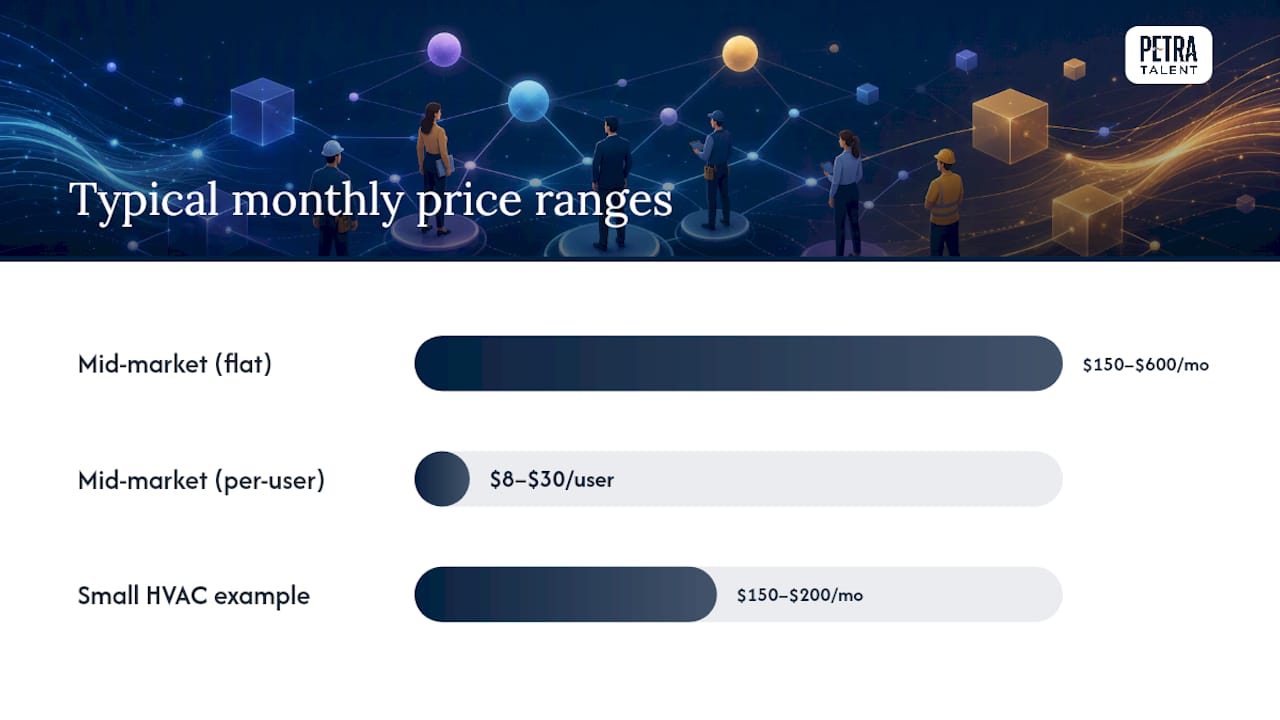
Pricing models across these platforms fall into four main structures, each having different total cost of ownership implications for contractor organizations.
Common pricing models:
- Per-seat (per-user) subscription — Rippling, Zoho Recruit, Manatal, Factorial. Cost scales with the number of HR or recruiting users, not hiring volume. Works well for small teams with consistent headcount.
- Per-job or per-posting — Some entry-level platforms charge per active job posting rather than per user. Useful for low-volume hiring but expensive at scale.
- Flat monthly subscription — Workable, Breezy HR, JazzHR, Teamtailor, Recruitee, Pinpoint, Ashby. Predictable cost regardless of user count or posting volume within plan limits.
- Annual enterprise contract (quote-based) — Greenhouse, Lever, iCIMS, Jobvite, SmartRecruiters, Gem, Loxo, Workday Recruiting. Pricing is negotiated based on company size, feature set, and contract length. Expect multi-year commitments at the enterprise level.
Typical starting-price ranges:
| Tier | Platforms | Approximate Starting Price |
|---|---|---|
| Entry-level | JazzHR, Recooty, Manatal, Factorial | — |
| Mid-market (flat) | Teamtailor, Breezy HR, Workable, Recruitee, Ashby | $150–$600/mo |
| Mid-market (per user) | Zoho Recruit, Rippling, Deel HR | $8–$30/user/mo |
| Enterprise (quote) | Greenhouse, Lever, iCIMS, Jobvite, SmartRecruiters, Gem, Loxo, Workday | Quote required |
| Agency alternative | Petratalent | Contingency fee on successful placement |
Hidden costs and TCO factors to budget for:
- SMS and texting volume charges — Many platforms charge separately for text message outreach to candidates. For a contractor posting field roles, SMS is often the highest-converting outreach channel. Confirm per-message or per-campaign costs before signing.
- Background-check integrations — Most ATS platforms partner with background-check providers (Checkr, Sterling, First Advantage) but charge per-check fees separately. Budget $30–$80 per check depending on depth.
- API and integration costs — Connecting an ATS to payroll (ADP, Paychex) or HRIS may require a paid integration tier or custom API work. Ask vendors specifically about the cost of payroll integrations.
- Data migration and onboarding — Moving historical candidate data from a spreadsheet or prior ATS can add $500–$5,000 in setup fees depending on data volume and vendor support model.
- Ongoing admin hours — A platform that requires significant manual configuration or workarounds for contractor-specific fields adds hidden labor cost. Factor in the time your team will spend managing the system.
Sample TCO scenarios:
- Small HVAC shop (under 20 employees, 10–20 hires/year): Workable or Breezy HR at $150–$200 per month, plus background checks at $50 per hire. Annual TCO: approximately $2,500–$4,000.
- Mid-size general contractor (50–150 employees, 50–100 hires/year): Greenhouse or Lever on an annual contract, plus payroll integration and background checks. Annual TCO: typically $15,000–$40,000 depending on negotiated rate.
- Large multi-site contractor (200-plus employees, 200-plus hires/year): iCIMS or Workday Recruiting with full integration suite. Annual TCO: $50,000 and above, including implementation and ongoing support.
Vendor questions to surface true TCO:
- What is included in the base subscription, and what triggers an upgrade to a higher tier?
- Are SMS messages included, or charged per message or per campaign?
- What does the payroll integration cost, and which payroll providers are supported natively?
- Is background-check integration included, or does it require a separate contract with the check provider?
- What is the data migration process, and is there a fee for historical data import?
How do you choose the right ATS for your contractor operation?
The single most important determinant in choosing an ATS for contractor hiring is fit to your actual hiring flow and integration with your payroll or HRIS system. A platform with impressive features that does not connect to your payroll provider creates manual re-entry work that erases the efficiency gains.
Decision checklist — must-have vs. nice-to-have:
Must-have for contractor workflows:
- Mobile-optimized application flow that works on a smartphone without requiring document uploads at the apply stage
- SMS or text messaging capability for candidate outreach and interview scheduling
- Integration with your current payroll provider (ADP, Paychex, QuickBooks, or equivalent)
- Background-check integration with a provider that covers the states where you operate
- Configurable fields for license and certification data, even if not native
- EEOC and compliance reporting that satisfies your federal or state contractor obligations
Nice-to-have for most contractor operations:
- AI-assisted candidate ranking (useful for high-volume roles; requires validation)
- Kiosk mode for in-person hiring events or walk-up applicants at job sites
- Employer branding and careers page builder
- CRM pipeline for passive candidate nurturing
- Advanced analytics and source-effectiveness reporting
Demo and discovery questions to ask every vendor:
- Show me the mobile application flow on a phone. How many steps does it take to submit an application?
- How does the system handle certification and license expiration tracking? Is it native or a custom field?
- What payroll systems do you integrate with natively, and what does that integration cost?
- Does the platform support 1099 contractor classification, or does it treat all candidates as W-2 employees?
- What is the implementation timeline for a company of our size, and what does the onboarding process include?
- How does the system handle OFCCP compliance reporting for federal contractors?
- Is there a sandbox or trial environment I can test before signing a contract?
- What are the SMS messaging limits and costs?
- What does data migration from our current system cost and how long does it take?
- What API access is available, and are there restrictions on third-party integrations?
Red flags to watch for during sales calls and demos:
- The vendor cannot show you a live sandbox or demo environment. A non-responsive demo is a strong signal of implementation complexity.
- Vague answers on compliance reporting. If a vendor cannot explain how their system supports EEOC data collection or OFCCP audit trails, that is a gap that creates legal exposure.
- No API or restricted API access. A closed system that cannot connect to your payroll or background-check provider will create manual workarounds that cost more than the software saves.
- Pricing that changes significantly after the initial quote. Ask for a written breakdown of all fees before signing.
- No reference customers in the construction or trades sector. General-purpose ATS vendors sometimes overstate their contractor-specific capabilities.
When should you use an ATS vs. hire a specialized recruitment agency?
The core rule of thumb: buy software when you need repeatable internal hiring scale. Hire a specialist agency when speed-to-fill, role complexity, or low-volume leadership hires matter more than process ownership.
An ATS gives your team control over the pipeline and reduces cost-per-hire at volume. It works well when you post the same roles repeatedly, have internal HR capacity to manage applicants, and your open positions attract enough qualified inbound candidates to make a pipeline worth managing. For a contractor posting ten field technician roles per quarter, a well-configured ATS pays for itself quickly.
The calculation changes for leadership roles, hard-to-fill technical positions, or any hire where a bad outcome costs more than the placement fee. A plumbing superintendent who leaves after 90 days, or an HVAC service manager who was never technically qualified in the first place, costs far more than a recruitment fee. That is where pre-screened candidates and agency expertise change the outcome.
Signals that indicate you should move from software-first to agency support:
- Fill rates on technical or leadership roles have been below 50% for two or more consecutive quarters
- Recent hires in key roles churned within six months
- The open role requires trade-specific certifications or licenses that a generic screening form cannot verify
- You are expanding into a new state or market where your sourcing network does not reach
- The role is a leadership or management position where a bad hire creates downstream operational risk
- Compliance complexity (multi-state, federal contractor status, prevailing wage) is adding legal exposure to your current hiring process
Petratalent’s approach for HVAC and plumbing contractors covers direct-hire placement, technical vetting, leadership searches, and workforce consultation. The agency model means contractors pay a placement fee only on a successful hire, not a monthly software subscription regardless of results.
A hybrid approach works well for many mid-size contractors: use an ATS for high-volume field technician roles where inbound volume is adequate, and engage Petratalent for leadership searches, hard-to-fill technical roles, or urgent program fills where time-to-hire is critical.
Key Takeaways
The strongest ATS choice for a contractor depends on company size, hiring volume, and whether the primary need is process efficiency or candidate quality. For hard-to-fill technical and leadership roles in HVAC and plumbing, Petratalent’s agency model delivers pre-vetted candidates faster than most self-serve ATS platforms can source them.
| Point | Details |
|---|---|
| Match platform to hiring volume | Entry-level platforms (JazzHR, Recooty) suit small shops; enterprise platforms (iCIMS, Workday) suit large multi-site contractors. |
| Contractor features require verification | Mobile apply, certification tracking, and 1099 workflows are rarely native; confirm during demos before signing. |
| TCO exceeds the subscription price | Budget for SMS fees, background checks, payroll integrations, and admin hours on top of the base subscription. |
| Compliance is non-negotiable | Federal contractors must satisfy OFCCP reporting requirements; verify audit trail and EEOC data collection with every vendor. |
| Petratalent for hard-to-fill roles | For HVAC and plumbing leadership or technical roles, Petratalent’s direct-hire and vetting services outperform a self-serve ATS on speed and candidate quality. |
Immediate action steps:
- Schedule demos with two to three ATS finalists and test the mobile application flow on a smartphone during each demo
- Run a two-week pilot with one open role before committing to a full deployment
- Request a written pricing breakdown that includes SMS fees, integration costs, and background-check pass-through charges
- Contact Petratalent for any leadership, superintendent, or hard-to-fill technical role that has been open for more than 30 days
A contractor hiring specialist’s perspective on what actually matters
Most ATS evaluations focus on features. The ones that go wrong in practice usually fail on something simpler: the application form is too long for a phone, the SMS follow-up is not configured, or the certification field was never set up because IT was not involved in the rollout.
Field workers do not apply from desks. They apply from trucks, job sites, and break rooms, on phones with inconsistent data connections. An application that requires uploading a resume, filling out ten fields, and creating an account will lose most of them before they submit. The platforms that convert field applicants well are the ones with short, mobile-first forms that ask for name, phone number, and availability, and then follow up by text within minutes.
The other gap that contractors consistently underestimate is certification verification. An ATS can store a certification number. It cannot call the licensing board to confirm it is current. That step still requires a human, whether that is your HR team or a recruiter who knows which boards to check in which states. For plumbing workforce vetting, that verification step is the difference between a compliant hire and a liability.
The practical tip that saves the most time during rollout: configure your SMS opt-in and kiosk mode before you post your first role. Most teams set these up after launch, which means the first wave of applicants goes through a slower, lower-conversion flow. Get the text messaging working on day one, and your conversion rate from applicant to interview will be noticeably higher from the start.
Petratalent: the agency alternative for HVAC and plumbing contractors
Software tools like Greenhouse, Workable, and iCIMS are strong options for contractors who want to own their hiring pipeline. But for HVAC and plumbing contractors filling technical or leadership roles, there is a faster and more reliable route.
Petratalent specializes in direct-hire placement, HVAC recruiting, and plumbing recruiting for mechanical contractors across the United States. The agency handles candidate sourcing, technical vetting, license verification, and market wage benchmarking, so contractors receive a shortlist of pre-qualified candidates rather than a raw applicant pool to sort through. For leadership searches, superintendent roles, and hard-to-fill technical positions, that difference in candidate quality is the reason most contractors who try the agency route do not go back to managing the pipeline alone.
The engagement model is straightforward: Petratalent works on a contingency basis, meaning no fee is owed unless a placement is made. There are no monthly subscriptions, no integration costs, and no implementation timelines to manage. For a contractor with an urgent open role or a history of failed hires in a specific position, that structure removes the financial risk of a slow or unsuccessful search.
To discuss a current opening or get a workforce consultation, visit Petratalent’s services page and submit a request. A specialist will respond with a timeline and next steps specific to your role and market.
Useful sources and further reading
The sources below are the primary references used in this guide. Contractors and recruiting teams should consult them directly to verify current pricing, compliance requirements, and vendor capabilities.
Compliance and legal resources:
- Discrimination — U.S. Department of Labor
- About OFCCP — U.S. Department of Labor
- Machine learning explained — MIT Sloan
- Applicant Tracking Systems (ATS) — G2
- Applicant Tracking Software — Capterra
- Applicant tracking systems — TechnologyAdvice
- Best Applicant Tracking Systems (ATS) in 2026 — The Undercover Recruiter
- Construction Recruiting Software for Contractors — 100Hires
- Applicant Tracking Solution | Arcoro
ATS review and comparison resources:
- Applicant Tracking Systems (ATS) — G2 — User reviews, feature tags, and ratings across ATS vendors. Read for patterns across multiple reviews rather than single ratings.
- Applicant Tracking Software — Capterra — Filterable ATS directory with user reviews and pricing signals.
- Applicant tracking systems — TechnologyAdvice — Comparative testing of ATS platforms with “best for” labels and starting-price examples.
- Best Applicant Tracking Systems (ATS) in 2026 — The Undercover Recruiter — Industry roundup for 2026 with vendor rankings and feature highlights.
Contractor-specific hiring resources:
- Construction Recruiting Software for Contractors — 100Hires — Guide to how construction and field hiring needs differ from office recruiting; useful for evaluating mobile apply and certification features.
- Applicant Tracking Solution — Arcoro — Vendor example of construction-focused ATS features including candidate texting, mobile applications, and compliance reporting.
AI and technology evaluation:
- Machine learning explained — MIT Sloan — Foundational explainer on how machine learning works and its limitations; use when evaluating vendor AI screening claims.
How to use review sites responsibly: Filter G2 and Capterra reviews by company size and industry when possible. Look for patterns in support quality, onboarding experience, and feature gaps rather than relying on overall star ratings. Check review dates and prioritize reviews from the past 12 months, as vendor products and support quality change with ownership and product updates.
| Resource | Best Used For |
|---|---|
| DOL / OFCCP | Verifying compliance obligations for federal and state contractor hiring |
| G2 / Capterra | Cross-checking user sentiment on support, onboarding, and feature gaps |
| TechnologyAdvice / Undercover Recruiter | Shortlist validation and “best for” cross-reference |
| 100Hires / Arcoro | Contractor-specific feature benchmarks (mobile apply, texting, compliance) |
| MIT Sloan | Evaluating vendor AI screening claims with appropriate skepticism |
Recommended
Related Posts

October 13, 2026
Recruiting Contract Terms: 10 Checks and Ready to Use Clauses
Define fee triggers, candidate ownership, guarantees, and compliance terms. Get a master agreement, short schedule,…

October 12, 2026
Offer Acceptance Rates: Segment Benchmarks, HVAC’s 3–5 Day SLA
See why a 78% to 82% offer acceptance benchmark can mislead, how role and source…

October 11, 2026
Bad Hires Can Cost Construction Firms 30% to 200% of Salary
Bad hires can cost construction firms 30% to 200% of annual salary. Calculate recruiting, rework,…

October 10, 2026
Construction Labor Forecasting for PMs: 7 Steps to Time Hiring
Learn when construction project managers should use WBS or simulation, track labor KPIs, and turn…