



TL;DR:
- Pre-screened candidates are vital for HVAC contractors to shorten hiring timelines and reduce costly bad hires. Implementing structured, skills-based pre-screening early in the process improves quality, speeds up hiring, and minimizes ghosting and turnover. Tools like automated screening and specialized recruiters enable small teams to efficiently execute this process without large HR resources.
Pre-screened candidates are the single most reliable way for HVAC contractors to protect hiring quality, reduce turnover, and fill roles before peak season demand overwhelms their teams. Candidate pre-screening, the industry term for structured early-stage evaluation before a formal interview, covers skills assessments, credential checks, and structured phone screens. Understanding why pre-screened candidates matter in HVAC is not optional for contractors competing in a tight 2026 labor market. The difference between a seven-day hire and a ninety-day vacancy often comes down to whether screening happened first.
Why pre-screened candidates matter in HVAC hiring timelines
Speed is a competitive advantage in HVAC recruiting. The average time to fill an HVAC position runs between 30 and 90 days. Contractors using a compressed, screening-first process cut that window to as little as seven days. That gap represents lost revenue, overworked technicians, and missed service calls.
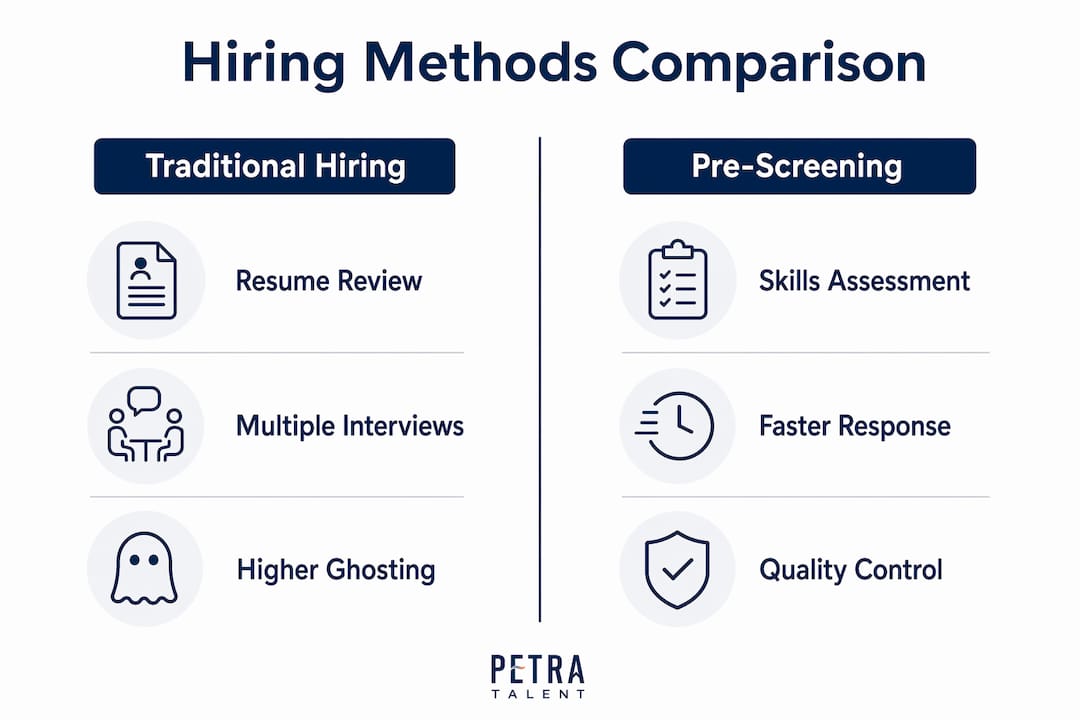
Skills-based screening ahead of interviews drives most of that improvement. Skills-based screening reduces time-to-hire by up to 50%, while conversational AI tools cut candidate ghosting by over 40%. Both numbers point to the same conclusion: the earlier you assess a candidate’s actual ability, the faster and cleaner the rest of the process runs.
| Hiring approach | Average time to fill | Ghosting risk | Quality control point |
|---|---|---|---|
| Resume review first, then interview | 30–90 days | High | Late in process |
| Screen first, interview later | 7–14 days | Reduced by 40%+ | Early in process |
Pro Tip: Set a firm 48-hour response window after a candidate applies. Conversational AI scheduling tools that instantly engage candidates keep top technicians from accepting a competitor’s offer while you are still reviewing resumes.
The speed benefit also protects hiring managers. When unqualified candidates reach the interview stage, they consume time that should go to evaluating real contenders. Pre-screening filters that waste before it happens.
How pre-screening reduces bad hires and their financial cost
Bad hires are expensive in any industry. In HVAC, they are operationally damaging. 46% of new hires fail within the first 18 months, and the root causes are almost always detectable during a rigorous pre-screen. Attitude problems, credential gaps, and unrealistic salary expectations surface in a structured 15-minute call. They rarely surface in a resume.
The financial exposure is significant. A bad hire costs between 30% and 200% of that employee’s annual salary when you factor in lost productivity, recruiting fees, and retraining. For an HVAC technician earning $60,000 per year, that is a direct loss of $18,000 to $120,000 per failed hire.
Pre-screening for the right criteria closes that gap. Effective screening evaluates:
- Technical credentials: EPA 608 certification, state licenses, and equipment-specific experience
- Work history consistency: gaps, short tenures, and reasons for leaving previous employers
- Compensation alignment: confirming salary expectations match the role before investing interview time
- Availability and logistics: start dates, commute range, and willingness to work on-call schedules
“Hiring managers wasting time interviewing unqualified candidates damages trust in recruiting. Pre-screening rebuilds this by providing consistent candidate quality.” — GoPerfect Candidate Screening Guide
The advantages of screening HVAC applicants early extend beyond cost. They protect the reputation of the HR team internally. When hiring managers receive only qualified candidates, they trust the recruiting process and engage more seriously with each interview.
Traditional HVAC hiring vs. structured pre-screening: a direct comparison
Most HVAC contractors still default to a resume-first workflow. A job post goes live, resumes arrive, a hiring manager skims them, and interviews are scheduled based on gut feel. This approach creates two problems. First, it puts the evaluation burden on the interview, which is the most time-consuming and emotionally influenced step. Second, it delays quality control until the end of the funnel.

The screen-first model reorders that sequence. Skills-based assessments before interviews produce a 78% improvement in quality of hire and cut time-to-hire by half. The interview then focuses on fit, communication, and team dynamics rather than basic qualification checks.
Pro Tip: Train your pre-screeners to look for reasons to eliminate a candidate, not reasons to advance them. ACCA’s hiring research confirms that focusing on disqualifiers early prevents emotional, unstructured decisions from reaching the interview stage.
Structured screening also improves fairness. When every candidate answers the same questions and is scored against the same rubric, the process becomes defensible and consistent. That matters for compliance and for building a team that reflects the actual requirements of the role, not the preferences of whoever happened to conduct the interview.
How to pre-screen HVAC candidates effectively
Implementing a pre-screening process does not require a large HR team. It requires a clear sequence and consistent execution. Here is a practical framework for HVAC hiring managers:
-
Define the screening criteria before posting the role. List the non-negotiable qualifications: certifications, years of experience, geographic availability, and compensation range. These become your disqualification filters.
-
Use an automated application screening tool. Platforms that parse resumes against defined criteria remove unqualified applicants before a human reviews a single file. This is where AI-driven screening tools act as a force multiplier for small HR teams.
-
Conduct a structured 15-minute pre-screen call. Structured pre-screen interviews are the highest-leverage activity in recruiting. Ask the same five to seven questions to every candidate and score responses on a consistent rubric.
-
Verify credentials before scheduling a full interview. Confirm EPA 608 certification, state licensing, and any manufacturer-specific training. This step takes ten minutes and eliminates a common source of late-stage hiring failures.
-
Communicate quickly and respectfully. The candidate experience during screening predicts whether top technicians stay engaged. A fast, professional response keeps your best candidates from accepting another offer. Reviewing HVAC hiring best practices helps teams build this communication cadence into their standard workflow.
-
Use a specialized recruiting partner for sourcing. When internal capacity is limited, working with a firm that already maintains a vetted candidate pool compresses the entire process. This is especially effective for attracting experienced HVAC workers who are not actively searching job boards.
Key Takeaways
Pre-screened candidates reduce HVAC hiring time from up to 90 days to as few as 7, while cutting bad hire rates and protecting company finances through early skills and credential verification.
| Point | Details |
|---|---|
| Speed advantage | Screening-first processes compress hiring timelines from 90 days to as few as 7 days. |
| Financial protection | Bad hires cost 30%–200% of annual salary; pre-screening catches disqualifiers early. |
| Quality of hire | Skills-based assessments before interviews improve quality of hire by 78%. |
| Ghosting reduction | Conversational AI tools reduce candidate ghosting by over 40% during screening. |
| Structured process | Standardized rubrics make screening defensible, consistent, and compliant. |
Why I think most HVAC contractors underinvest in pre-screening
After working closely with mechanical contractors across the United States, the pattern is consistent. Companies that struggle with turnover are almost always skipping the screening step, not because they do not value it, but because they underestimate how much time it saves downstream.
The 2026 HVAC labor market is not forgiving. Qualified technicians have options, and they move fast. A contractor who takes three weeks to schedule a first interview has already lost the candidate. The contractors winning on hiring right now treat pre-screening as a non-negotiable first step, not an optional filter.
The most common mistake I see is treating the pre-screen call as a formality. It is not. A well-run 15-minute call surfaces more useful information than a 60-minute unstructured interview. Use a rubric. Score every candidate the same way. The common HVAC hiring mistakes that cost contractors the most are almost always rooted in skipping this step.
— David
How Petratalent supports HVAC companies with pre-screened candidates
Petratalent specializes in sourcing and vetting skilled HVAC professionals across the United States, so contractors receive candidates who have already cleared technical screening, credential verification, and compensation alignment checks.
For HVAC companies dealing with common recruitment challenges like long vacancy windows, high turnover, and unqualified applicants reaching the interview stage, Petratalent’s structured recruiting process addresses each problem directly. The firm’s HVAC recruiting services cover technician roles, project managers, and leadership positions, with every candidate evaluated against role-specific criteria before a hiring manager sees their profile. Explore Petratalent’s full service offerings to find the right fit for your team’s needs.
FAQ
Why do pre-screened candidates reduce HVAC hiring time?
Pre-screened candidates have already cleared credential checks, skills assessments, and compensation alignment before reaching the interview stage. This removes the most time-consuming qualification steps from the hiring manager’s workload and compresses the overall process.
What criteria should HVAC companies use to screen candidates?
The core criteria for evaluating HVAC candidates include EPA 608 certification, state licensing, relevant equipment experience, work history consistency, and compensation expectations. Verifying these before a formal interview prevents late-stage hiring failures.
How much does a bad HVAC hire actually cost?
A bad hire costs between 30% and 200% of the employee’s annual salary, covering lost productivity, recruiting fees, and retraining expenses. For a technician earning $60,000, that translates to a direct loss of $18,000 to $120,000.
What is the screen-first, interview-later model?
The screen-first model places skills assessments and structured pre-screen calls before any formal interview. Organizations using this approach report a 78% improvement in quality of hire and reduce time-to-hire by up to 50%.
Can small HVAC companies implement pre-screening without a large HR team?
Yes. Automated resume parsing tools, conversational AI scheduling platforms, and specialized recruiting partners like Petratalent allow small teams to run structured pre-screening without adding headcount. The process requires clear criteria and consistent execution, not a large staff.
Recommended
Related Posts
October 13, 2026
Recruiting Contract Terms: 10 Checks and Ready to Use Clauses
Define fee triggers, candidate ownership, guarantees, and compliance terms. Get a master agreement, short schedule,…
October 12, 2026
Offer Acceptance Rates: Segment Benchmarks, HVAC’s 3–5 Day SLA
See why a 78% to 82% offer acceptance benchmark can mislead, how role and source…
October 11, 2026
Bad Hires Can Cost Construction Firms 30% to 200% of Salary
Bad hires can cost construction firms 30% to 200% of annual salary. Calculate recruiting, rework,…
October 10, 2026
Construction Labor Forecasting for PMs: 7 Steps to Time Hiring
Learn when construction project managers should use WBS or simulation, track labor KPIs, and turn…