



TL;DR:
- Hiring plumbing apprentices strategically involves structured recruitment, competitive wages, and progressive training to address the upcoming workforce shortage. Employers must assess their capacity, use multiple sourcing channels, and implement a repeatable hiring process to ensure quality candidates and better retention. Developing a phased training program and tying wages to skill milestones help build a skilled, motivated, and consistent workforce over time.
Hiring plumbing apprentices strategically means selecting, training, and retaining entry-level workers through structured recruitment, market-aware wages, and standardized training frameworks. The U.S. faces a shortage of 550,000 plumbing positions by 2027, making reactive hiring a losing approach for any contractor who wants to grow. Only 17.6% of heating and plumbing businesses currently employ apprentices, which means contractors who build a formal apprenticeship program now hold a real competitive edge. This guide covers the prerequisites, sourcing channels, step-by-step hiring process, and training frameworks that turn raw recruits into reliable, skilled plumbers.
How to hire plumbing apprentices strategically: business readiness first
Before posting a single job listing, contractors must assess whether their business can actually support an apprentice. Apprentice hiring is not just a staffing decision. It is an operational commitment that requires dedicated supervisor time, training materials, and a realistic budget for reduced productivity in the early months.
The table below compares manual versus automated screening approaches so contractors can choose the right fit for their current capacity.
| Screening Method | Manual | Automated |
|---|---|---|
| Time per candidate | 2–4 hours | 20–40 minutes |
| Consistency | Variable | High |
| Cost | Low upfront | Moderate setup cost |
| Best for | Small crews under 5 | Growing firms with volume hiring |
Essential tools and processes to have in place before recruiting include:
- Detailed job descriptions that specify physical requirements, expected hours, and wage progression
- Candidate screening criteria covering reliability indicators, communication skills, and basic mechanical aptitude
- Scheduling software such as Jobber or ServiceTitan to manage apprentice assignments alongside licensed plumbers
- A defined supervisor role so apprentices always have a named point of contact on the jobsite
27.3% of contractors identify time and workload as their biggest challenge when taking on apprentices. That figure confirms that preparation, not enthusiasm, determines whether an apprenticeship program succeeds or stalls.
Pro Tip: Budget for a 15–20% productivity dip during the first 90 days of any new apprentice’s tenure. Build that cost into your project pricing before the hire, not after.
How do you find quality plumbing apprentice candidates?
The best sourcing channels for plumbing apprentice recruitment are local trade schools, registered apprenticeship programs, online job boards, and employee referrals. Each channel produces a different candidate profile, so contractors benefit from using more than one at a time.

| Sourcing Channel | Candidate Quality | Cost | Speed |
|---|---|---|---|
| Local trade schools | High technical baseline | Low | Moderate |
| Registered apprenticeship programs (e.g., UA Local unions) | Structured, pre-vetted | Low to moderate | Slower |
| Online job boards (Indeed, ZipRecruiter) | Variable | Moderate | Fast |
| Employee referrals | High cultural fit | Low | Fast |
When evaluating early-stage candidates, prioritize these qualities over technical knowledge:
- Reliability: Consistent attendance history in school or previous jobs
- Willingness to learn: Demonstrated curiosity, not just credentials
- Communication skills: Ability to follow instructions and ask clear questions
- Physical readiness: Comfort with manual labor, confined spaces, and variable schedules
Employer branding matters more than most contractors realize. A clear, honest job posting that describes wage progression, mentorship, and career growth attracts candidates who are serious about the trade. Benchmarking wages above legal minimums to match local market rates significantly improves both application volume and candidate quality. Contractors who post vague listings with minimum wage offers consistently attract higher turnover candidates.
Pro Tip: Post apprentice openings on your company’s Facebook and Instagram pages. Community colleges and high school vocational programs often share contractor posts directly with students, at no cost to you.
What does the step-by-step hiring process look like?
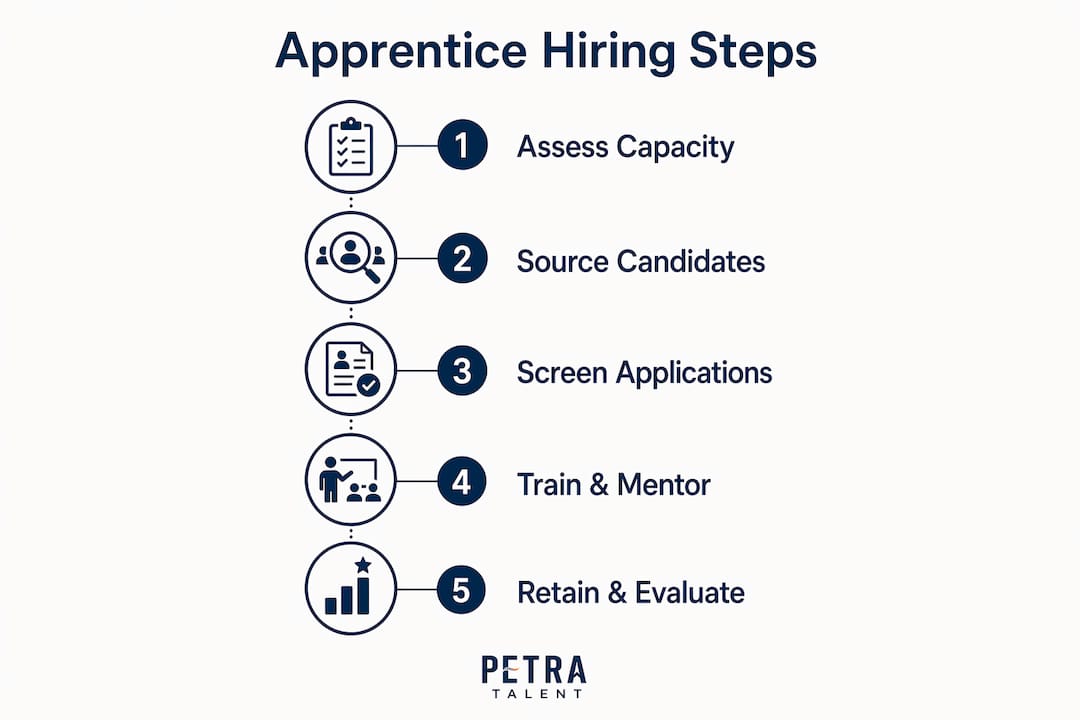
A repeatable, structured hiring process for plumbing apprentices reduces time-to-hire and improves selection quality. The following workflow covers the full cycle from posting to offer.
- Write a specific job posting. Include wage range, expected progression, and daily responsibilities. Vague postings attract unqualified applicants.
- Screen applications with defined criteria. Use a simple scoring sheet covering reliability indicators, relevant experience, and communication quality. Automated applicant tracking tools like Workable or Breezy HR reduce manual review time.
- Conduct a phone screen. Keep it to 15 minutes. Assess attitude, availability, and basic understanding of what plumbing work involves.
- Schedule a practical interview. Bring finalists to the shop or a jobsite. Observe how they handle tools, follow instructions, and interact with your team.
- Check references. Focus on attendance, attitude, and ability to take direction. Past supervisors reveal more than any interview answer.
- Make a transparent offer. Explain the earn-while-you-learn wage structure clearly, including when and how raises are tied to skill milestones.
Transparency about growth and wage progression during the offer stage reduces early turnover. Candidates who understand exactly what they are signing up for stay longer and perform better. Contractors should also confirm basic legal compliance at this stage, including verifying work authorization and confirming the apprentice is enrolled in or eligible for a registered apprenticeship program in their state.
How to design a progressive training program for apprentices
A structured apprentice training program follows a four-level, 48-month framework that builds competency in stages rather than overwhelming new hires with everything at once.
- Months 0–6 (Level 1): Basic safety, tool identification, jobsite conduct, and company culture orientation
- Months 6–18 (Level 2): Diagnostics, basic repairs, reading blueprints, and customer communication fundamentals
- Months 18–36 (Level 3): Complex installations, small project management, and code compliance basics
- Months 36–48 (Level 4): Independent work, peer mentorship, and preparation for journeyman licensing
Lutz Plumbing Inc. demonstrated the value of this approach by shifting from informal training to a structured program that blends technical skills with soft skills and company culture. The result was measurably better retention and more consistent work quality across their crews. Blending technical plumbing expertise with communication skills and business awareness creates technicians who fit the company culture and deliver higher quality work on every call.
Retention improves when pay increases are tied to competency milestones, not just time served. Apprentices who see a clear connection between skill development and their paycheck stay engaged and motivated. Deferred raises with no defined criteria are one of the leading causes of mid-program dropout.
Mentorship is the other critical retention lever. Assigning each apprentice to a specific licensed plumber, rather than rotating them through the crew randomly, builds accountability on both sides. The mentor gains leadership experience. The apprentice gains a consistent technical reference.
Pro Tip: Do not try to build a full four-year program before your first hire. Successful programs grow incrementally: establish a basic structure, add consistency, then layer in accountability and feedback cycles over time.
Key takeaways
Contractors who hire plumbing apprentices strategically build a more stable, skilled workforce by combining structured recruitment, competitive wages, and progressive training tied to measurable competency milestones.
| Point | Details |
|---|---|
| Prepare before you post | Assess supervisor capacity, budget, and training tools before recruiting any apprentice. |
| Use multiple sourcing channels | Combine trade schools, apprenticeship programs, and referrals to improve candidate quality. |
| Build a repeatable hiring process | A six-step workflow from posting to offer reduces time-to-hire and improves selection. |
| Tie wages to skill milestones | Competency-based pay increases retain apprentices better than tenure-based raises. |
| Grow the training program incrementally | Start with a basic structure and add complexity over time to avoid overwhelming your team. |
Why apprenticeships are a business control, not just a labor source
I have worked with enough plumbing contractors to know that the ones who treat apprenticeships as a control mechanism, not just cheap labor, are the ones who build the most consistent crews. When you bring someone in from day one and train them your way, you eliminate the unlearning problem. You do not spend months correcting habits they picked up somewhere else.
The contractors who struggle most are the ones who hire reactively when they are already short-staffed. They skip the structure, skip the mentorship, and wonder why the apprentice quits at month four. The investment in a proper onboarding and training process is real. It costs time and it costs money. But the alternative, cycling through unqualified hires with no development plan, costs far more over a two-year period.
Apprenticeships also standardize customer interaction from the start. That consistency is what builds a brand. If you want to learn more about building the right team from the ground up, the plumbing leadership hiring guide from Petratalent covers how to align your entire crew structure, not just the entry level.
— David
How Petratalent supports plumbing apprentice recruitment
Plumbing contractors who want to build a stronger workforce without spending months on sourcing and screening have a direct path forward with Petratalent.

Petratalent specializes in plumbing recruiting services for mechanical contractors across the United States, covering everything from apprentice sourcing to technical vetting and workforce consultation. The team matches contractors with pre-screened candidates who fit both the technical requirements and the company culture. That means less time reviewing unqualified applications and more time building your crew. Petratalent also provides market wage insights to help contractors set competitive compensation from day one. If you are ready to build a structured apprenticeship pipeline, explore Petratalent’s full services to see how a specialized recruiting partner accelerates the process.
FAQ
What does it mean to hire plumbing apprentices strategically?
Strategic apprentice hiring is a structured, market-aware approach that combines defined recruitment criteria, competitive wages, and a progressive training program. It replaces reactive, informal hiring with a repeatable process tied to business growth goals.
How long does a plumbing apprenticeship program typically last?
A standard plumbing apprenticeship runs 48 months and progresses through four competency levels, from basic safety and tools to independent work and peer mentorship.
What is the biggest challenge contractors face with apprentices?
Time and workload are the top challenges, cited by 27.3% of contractors. Planning for reduced productivity in the first 90 days and assigning a dedicated mentor significantly reduces this friction.
How should contractors set apprentice wages?
Wages should be benchmarked to local market rates, not just legal minimums, and tied to skill milestones rather than time served. This approach improves both recruitment and retention.
Where is the best place to find plumbing apprentice candidates?
Local trade schools, UA Local union apprenticeship programs, Indeed, ZipRecruiter, and employee referrals each produce strong candidates. Using two or more channels simultaneously improves both volume and quality.
Recommended
Related Posts

October 13, 2026
Recruiting Contract Terms: 10 Checks and Ready to Use Clauses
Define fee triggers, candidate ownership, guarantees, and compliance terms. Get a master agreement, short schedule,…

October 12, 2026
Offer Acceptance Rates: Segment Benchmarks, HVAC’s 3–5 Day SLA
See why a 78% to 82% offer acceptance benchmark can mislead, how role and source…
October 11, 2026
Bad Hires Can Cost Construction Firms 30% to 200% of Salary
Bad hires can cost construction firms 30% to 200% of annual salary. Calculate recruiting, rework,…

October 10, 2026
Construction Labor Forecasting for PMs: 7 Steps to Time Hiring
Learn when construction project managers should use WBS or simulation, track labor KPIs, and turn…