




TL;DR:
- Hiring HVAC project managers with 3 to 5 years of experience and strong procurement skills is essential for project success.
- Effective sourcing combines specialized recruiters, targeted LinkedIn searches, trade associations, and referrals, emphasizing cultural fit and technical competence.
- A successful hire is supported by onboarding clarity, integrated technology, and clear career progression, ensuring long-term retention and project excellence.
An HVAC project manager is the professional responsible for planning, coordinating, and delivering mechanical system installations and upgrades on time and within budget. Hiring the right person for this role determines whether a commercial HVAC project finishes on schedule or spirals into costly delays. The role spans everything from data center cooling systems to school district HVAC upgrades, and the stakes are high on every job. This article gives construction and project leaders a direct framework to hire HVAC project managers who can perform from day one.
What qualifications should you look for when hiring an HVAC project manager?
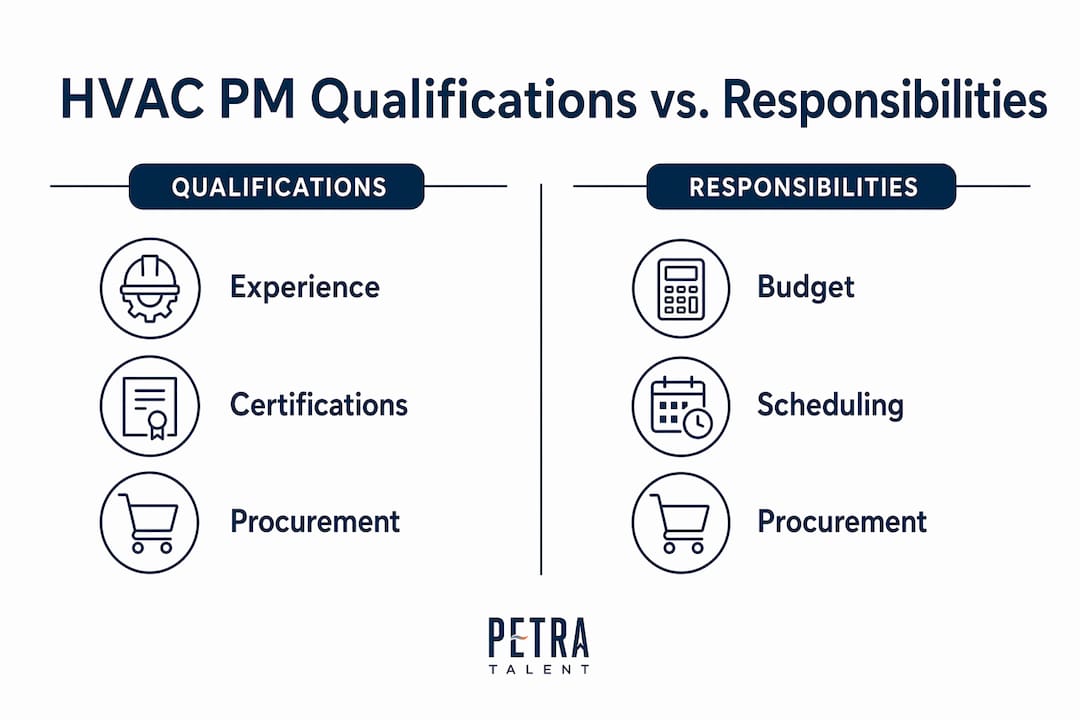
The baseline for most HVAC project manager roles is 3 to 5 years of experience managing mechanical construction projects. Senior roles overseeing complex multi-system delivery typically require 8 to 10 years of hands-on project leadership. That gap matters because senior candidates bring procurement judgment, subcontractor management experience, and client communication skills that junior candidates simply have not developed yet.
Preferred educational backgrounds include a bachelor’s degree in construction management, mechanical engineering, or HVAC systems technology. Certifications that signal professional credibility include:
- PMP (Project Management Professional): Validates structured project delivery methodology
- OSHA 30: Confirms site safety competency required on most commercial projects
- NATE or ACCA credentials: Indicate technical depth in mechanical systems
Candidates come from two distinct pipelines. Field-up candidates started as technicians or installers and built project management skills through experience. Engineering-in candidates entered through design or estimating roles. Both backgrounds produce strong PMs, but field-up candidates typically have stronger subcontractor relationships and site awareness, while engineering-in candidates tend to excel at documentation, BIM coordination, and pre-construction planning.
Pro Tip: When reviewing resumes, look specifically for candidates who have managed equipment procurement on projects with long lead times. This single skill separates average PMs from those who protect your schedule.
How to find and attract qualified HVAC project managers
Sourcing qualified candidates requires a multi-channel approach because the pool of experienced mechanical PMs is narrow and competitive. Senior HVAC project managers command premium compensation due to skill scarcity, which means passive candidates are often the best ones. You will not find them by posting a generic job listing and waiting.
Use these sourcing channels in order of effectiveness:
- Industry-specific job boards: Platforms like ConstructionJobs.com and the Associated Builders and Contractors (ABC) job board reach candidates already working in mechanical construction.
- LinkedIn targeted search: Filter by title, location, and company type to identify PMs currently working at competing mechanical contractors.
- Specialized HVAC recruiters: Firms like Petratalent focus exclusively on mechanical trades and maintain vetted candidate networks that general staffing agencies do not have access to.
- Trade association networks: SMACNA and MCAA chapter events connect you directly with working professionals who are not actively job searching but may be open to the right opportunity.
- Employee referrals: Your current superintendents and senior technicians often know strong PM candidates from past projects.
Your job description also does the sourcing work for you, or against you. Descriptions that list only duties attract applicants. Descriptions that explain project types, team size, technology used, and growth potential attract candidates who are evaluating you as seriously as you are evaluating them. Reviewing common HVAC hiring mistakes before writing your job post prevents the most common sourcing failures.
What are the critical responsibilities of an HVAC project manager?
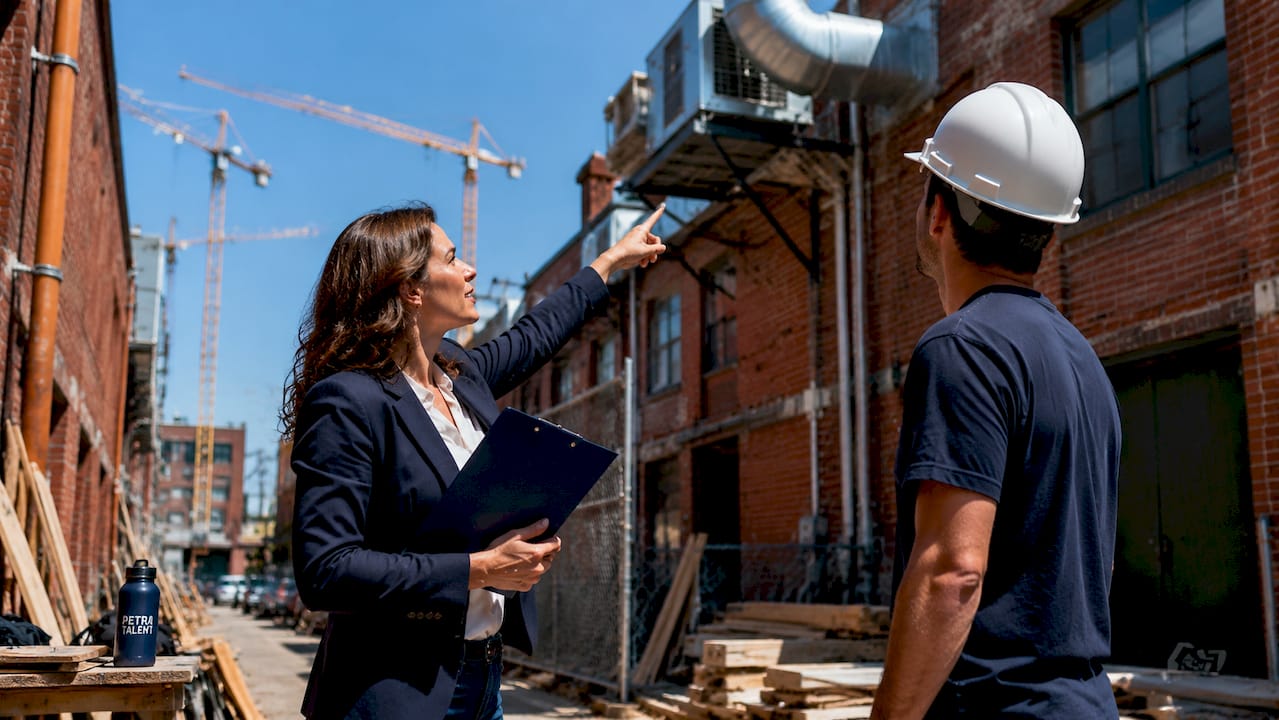
The role of project manager in HVAC construction spans pre-construction planning through final punch list and project closeout. Understanding the full scope helps you evaluate whether a candidate’s experience actually matches your project complexity.
The table below clarifies the distinction between a project manager and a superintendent, a separation that is best practice on large commercial projects:
| Responsibility Area | Project Manager | Superintendent |
|---|---|---|
| Budget and financial tracking | Owns cost reports, change orders, and billing | Limited involvement |
| Schedule management | Builds and updates master schedule | Executes daily field schedule |
| Subcontractor coordination | Contracts, scopes, and holds subs accountable | Directs field work daily |
| Client communication | Primary point of contact for owner and GC | Minimal direct client contact |
| Safety oversight | Sets policy and ensures compliance | Enforces safety on site daily |
The PM manages the business side of a project while the superintendent manages field execution. Confusing these roles, or assigning both to one person on large projects, is a common cause of project failures.
One responsibility that separates strong PMs from average ones is procurement management. Equipment lead times of 16 to 24 weeks require immediate action after contract award. A PM who delays submittals or equipment orders by even two weeks can push a project’s mechanical completion date by a month or more.
Pro Tip: During interviews, ask candidates to walk you through how they managed equipment procurement on their last three projects. The specificity of their answer tells you more than any resume line item.
Common challenges when hiring HVAC project managers
The shortage of experienced mechanical PMs is the defining constraint in this market. Data center projects and large commercial builds are driving strong demand for mechanical project managers, which means your competitors are recruiting the same small pool of candidates. Waiting for the perfect candidate to apply is not a viable strategy.
Beyond sourcing, contractors frequently make these hiring errors:
- Prioritizing technical knowledge over communication skills, then wondering why client relationships suffer
- Undervaluing change order management experience, which directly affects project profitability
- Skipping cultural fit assessment, which leads to high turnover even when technical skills are strong
- Hiring for current project size rather than the project complexity you plan to take on in 12 to 18 months
“Moving teams from reactive to process-driven execution requires operationalizing culture, not just hiring talent.” — Bradley Henderson, Bay Climate Control
The most overlooked challenge is assessing leadership capability. A PM who cannot hold subcontractors accountable or communicate schedule impacts to a general contractor will underperform regardless of their technical background. Behavioral interview questions focused on conflict resolution and accountability reveal this faster than any technical assessment. Reviewing HVAC recruitment challenges specific to mechanical contractors helps hiring managers prepare for these obstacles before they cost time and money.
Best practices for onboarding and retaining HVAC project managers
Retention starts on day one. PMs who join a company without clear expectations, defined tools, or a visible career path leave within 18 months, taking project knowledge and client relationships with them. A structured onboarding process prevents this.
Follow these steps to set new HVAC project managers up for long-term success:
- Define measurable goals for the first 90 days: Assign a specific project, set budget and schedule targets, and schedule weekly check-ins to address gaps early.
- Provide the right technology from day one: Integrated project management platforms reduce administrative overhead and give PMs visibility across all active projects. Disconnected tools create delays and errors.
- Invest in ongoing certification: Support PMP renewal, OSHA training, and BIM software proficiency. PMs who grow their skills stay longer and deliver better results.
- Build accountability into the culture: Successful PMs own responsibility for team errors to sustain client trust. Reward this behavior explicitly rather than punishing mistakes.
- Create a visible career path: PMs who see a route to senior PM, operations manager, or VP of construction stay motivated. Companies that treat the PM role as a ceiling lose their best people to competitors who offer a ladder.
Pro Tip: Pair a new PM with your most experienced superintendent for the first project. The field knowledge transfer that happens in those first 60 days is worth more than any formal training program.
Key takeaways
Hiring skilled HVAC project managers requires matching verified technical credentials and procurement experience to your specific project complexity, then supporting retention through clear expectations, technology, and career growth.
| Point | Details |
|---|---|
| Qualifications baseline | Require 3 to 5 years of experience minimum, with PMP and OSHA 30 certifications preferred. |
| Procurement expertise | Prioritize candidates who have managed 16 to 24 week equipment lead times on past projects. |
| PM vs. superintendent | Separate these roles on large projects to protect both business outcomes and field execution. |
| Multi-channel sourcing | Use specialized recruiters, trade associations, and LinkedIn to reach passive candidates. |
| Retention starts at onboarding | Set 90-day goals, provide integrated technology, and build a visible career path from day one. |
What I have learned about hiring HVAC project managers
The contractors who hire well in this market share one habit: they evaluate procurement judgment before anything else. I have seen technically strong PMs derail projects simply because they did not understand that equipment orders cannot wait until the shop drawings are fully approved. That 16 to 24 week lead time window is unforgiving, and most candidates have never been explicitly taught to manage it.
The second thing I have learned is that communication skills are not a soft requirement. A PM who cannot translate field problems into language a building owner understands will lose client trust on the first significant change order. That trust, once lost, is rarely recovered. Technical competence gets you to project completion. Communication skills get you the next contract.
Finally, the best HVAC project managers I have seen thrive in companies that operationalize accountability rather than just talk about it. When a PM knows they are expected to own team mistakes and that leadership will back them up when they do, they stop hiding problems and start solving them. That cultural shift is what separates companies that retain strong PMs from those that cycle through them every two years.
— David
How Petratalent helps you find the right HVAC project managers

Petratalent specializes in recruiting project managers, superintendents, and leadership talent for mechanical contractors across the United States. The firm’s process includes role-specific candidate sourcing, technical vetting, and market wage analysis, so you are not guessing at compensation or interviewing candidates who do not meet your project requirements. For contractors looking to attract experienced HVAC talent without spending months on a search, Petratalent provides a direct path to qualified candidates who have been screened for both technical skills and cultural fit. Explore Petratalent’s recruitment services to see how the firm supports construction leaders at every stage of the hiring process.
FAQ
What experience level should an HVAC project manager have?
Most commercial HVAC project manager roles require 3 to 5 years of mechanical construction experience. Senior roles managing complex or multi-system projects typically require 8 to 10 years.
What is the difference between an HVAC project manager and a superintendent?
The project manager handles the business side of a project, including budgets, contracts, and client communication. The superintendent manages daily field execution and crew coordination.
How do you find qualified HVAC project managers?
The most effective channels are specialized HVAC recruiters, LinkedIn targeted searches, trade association networks like SMACNA and MCAA, and employee referrals from current field staff.
Why is procurement management critical for HVAC project managers?
HVAC equipment lead times of 16 to 24 weeks mean that delays in submittals or purchase orders directly push back project completion dates, often by weeks or months.
What certifications matter most when hiring HVAC project managers?
PMP certification validates project delivery methodology, and OSHA 30 confirms site safety competency. Both are standard requirements on most commercial mechanical construction projects.
Recommended
Related Posts
October 13, 2026
Recruiting Contract Terms: 10 Checks and Ready to Use Clauses
Define fee triggers, candidate ownership, guarantees, and compliance terms. Get a master agreement, short schedule,…
October 12, 2026
Offer Acceptance Rates: Segment Benchmarks, HVAC’s 3–5 Day SLA
See why a 78% to 82% offer acceptance benchmark can mislead, how role and source…
October 11, 2026
Bad Hires Can Cost Construction Firms 30% to 200% of Salary
Bad hires can cost construction firms 30% to 200% of annual salary. Calculate recruiting, rework,…
October 10, 2026
Construction Labor Forecasting for PMs: 7 Steps to Time Hiring
Learn when construction project managers should use WBS or simulation, track labor KPIs, and turn…