



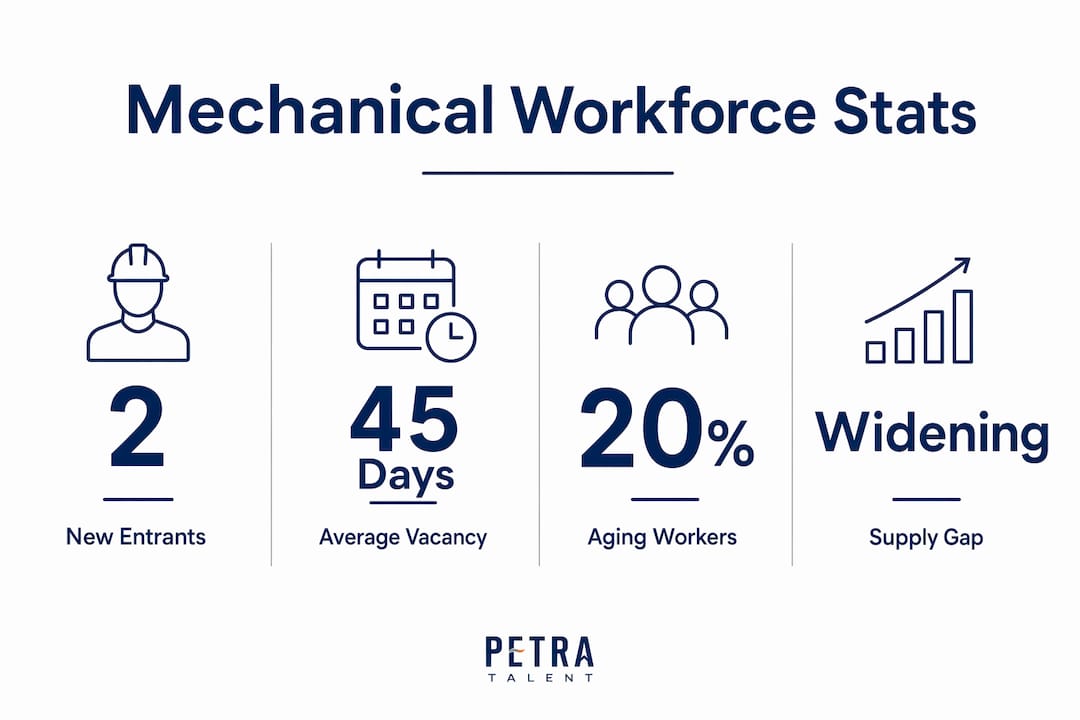
Mechanical subcontractors across the United States are facing a hiring crisis that goes well beyond a simple worker shortage. The core problem is structural: only 2 new workers enter skilled trades for every 5 retirees leaving, and the Association of Builders and Contractors estimates the construction industry needs an additional 454,000 new workers annually just to keep pace with demand. For mechanical subs specifically, that gap is sharper because the roles are more specialized and the consequences of a bad hire are more costly.
Why mechanical subs struggle finding talent comes down to several compounding forces:
- An aging workforce retiring faster than new workers can be trained
- A precision shortage in specialized skills like HVAC controls, EV thermal, and semiconductor mechanical
- Traditional hiring models that were built for a different labor market
- Wage competition from adjacent industries pulling from the same thin candidate pool
- Societal stigma around trades careers shrinking the pipeline at the source
- Immigration and labor mobility restrictions limiting geographic flexibility
- Technology demands that outpace what most training programs currently teach
Each of these factors feeds the others. A contractor who cannot fill a controls technician role in 45 days loses the bid to a competitor who can. That pressure is now the daily reality for mechanical subcontractors in 2026.
1. What does the current mechanical workforce supply actually look like?
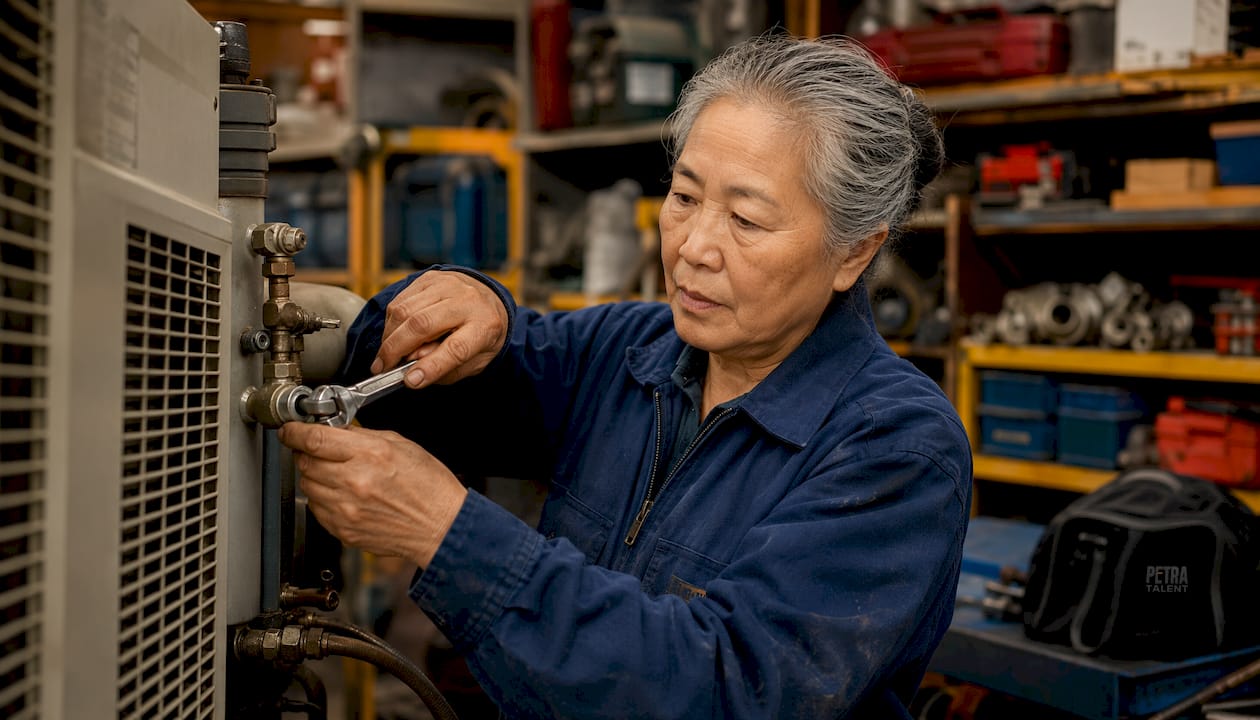
The supply of qualified mechanical workers has not kept pace with project demand, and the gap is widening. Mechanical labor capacity has become a primary constraint on when and how infrastructure projects move forward, not just a background concern for HR teams.
| Workforce Indicator | Current Condition |
|---|---|
| New workers per 5 retirees | 2 entrants |
| Annual openings (mechanical engineers) | — |
| Qualified candidates per open engineering role | 1 for every 3 openings |
| Average time-to-hire (mid/senior roles) | 40–50 days |
| Construction workers aged 55 or older | a significant share |
Geographic distribution makes the shortage uneven. Engineering talent concentrates in established hubs like the Bay Area, Boston, and Seattle, while major infrastructure projects are increasingly landing in secondary cities such as Phoenix, Columbus, and Huntsville, where local pipelines are thin. A mechanical sub awarded a semiconductor fab project in Phoenix cannot simply pull from a deep local bench.
Several factors are compressing the available workforce pool:
- Vocational programs were hollowed out over decades as schools pushed four-year college enrollment
- Lingering stigma against blue-collar trades continues to discourage younger workers from considering them
- Apprenticeship enrollment, while growing in some regions, still lags behind retirement rates
- Women remain a small fraction of the mechanical trades workforce despite growing interest
- Workers born between 1965 and 1985 face the same physical demands that are accelerating retirements among the generation ahead of them
The pipeline problem is not new, but the demand side has accelerated sharply. Reshoring driven by the CHIPS Act, Inflation Reduction Act, and federal infrastructure spending has created concentrated demand in cities without the workforce depth to support it. Contractors who relied on regional labor markets for decades are now competing nationally for the same candidates.
2. Which mechanical specialties are the hardest to staff?
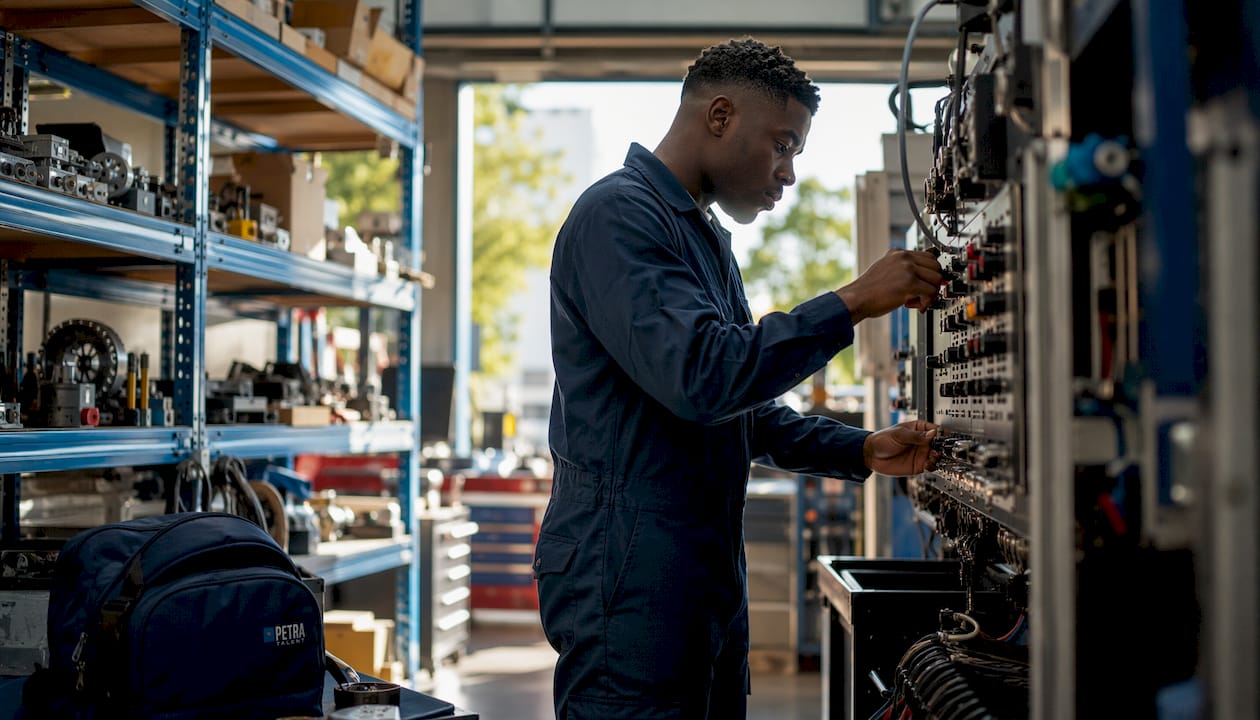
Not every mechanical role faces equal pressure. The talent shortage in mechanical fields is a precision shortage, concentrated in specific specialisms where formal education pipelines have not caught up to employer demand.
68% of engineering firms report that mechanical design is among the hardest specialties to fill, and the time-to-hire for mid and senior roles has stretched to 40–50 days on average. For the narrowest specialisms, searches routinely run longer.
The specialties with the highest hiring difficulty include:
- HVAC controls and building automation (BAS/BMS programming, DDC systems)
- EV thermal management (battery cooling, heat pump integration)
- Semiconductor process equipment (cleanroom mechanical, vacuum systems)
- Opto-mechanical design (precision alignment, lens mounting)
- PLC-heavy controls engineering (plant-floor programming, SCADA integration)
- Defense and aerospace mechanical (cleared candidates with structural or stress analysis backgrounds)
“The US mechanical engineering market in 2026 is not a generalist shortage. It is a precision shortage. General availability has improved, but competition for specialized skills remains intense.” — FLARE Search, 2026 Engineering Hiring Market
The mismatch is about alignment, not volume. Universities continue to graduate mechanical engineers, but employers need narrow expertise that a generalist with three years of experience cannot provide. A mechanical sub that wins a data center cooling contract needs engineers with thermal and HVAC controls backgrounds, not broad product design experience. When the wrong candidates flood the applicant pool, hiring timelines stretch and project schedules slip.
Certification and clearance requirements add another layer. Defense-adjacent mechanical roles require active security clearances, and sponsoring a clearance from scratch adds 6–18 months to time-to-productivity. Many projects simply cannot absorb that delay.
3. How does the aging workforce affect project schedules?
The retirement wave in mechanical trades is not a future problem. One in five construction workers is already 55 or older, and the average construction worker retires at 61. The workers leaving now are not junior generalists. They are the senior technicians and engineers who carry decades of institutional knowledge that cannot be transferred through a two-week notice period.
| Age Group | Workforce Share | Retirement Horizon |
|---|---|---|
| 55 and older | One in five construction workers | Retiring now |
| 45–55 | Significant share of engineering workforce | Retiring within 10 years |
| Younger workers | Underrepresented in mechanical trades | Entering slowly |
The knowledge gap is the real cost. A senior stress analyst or controls engineer who retires takes with them the understanding of why specific tolerances exist, which systems have failure histories, and how to navigate a particular client’s operational requirements. A replacement hire with strong credentials still needs months before reaching independent productivity on complex projects.
Consequences of the aging workforce for mechanical subcontractors:
- Project timelines extend when experienced leads are unavailable or overloaded
- Mentoring capacity shrinks as senior workers retire before successors are ready
- Institutional knowledge is lost when documentation systems are inadequate
- Younger workers take longer to reach full productivity without experienced mentors
- Bid competitiveness drops when a firm cannot staff a project with proven senior talent
The “silver tsunami” label used across the construction industry captures the scale but understates the speed. Contractors who have not started proactive workforce planning are already behind. Firms that invest in apprenticeship programs and structured knowledge transfer now will have a measurable staffing advantage within three to five years.
4. Why do traditional hiring models fail mechanical subcontractors?
The hiring processes most mechanical subs use were designed for a labor market that no longer exists. Vague job descriptions, slow decision cycles, and generic compensation benchmarks are the three most common reasons qualified candidates disappear before an offer is made.
A job posting that reads “mechanical engineer, 5+ years experience, SolidWorks preferred” attracts the wrong applicants and buries the right ones. Specific job descriptions that name the exact technical requirements, the tools used daily, and the problem the role will solve in the first 90 days consistently produce better candidate pools and shorter searches. The job description is often the bottleneck, not the talent pool.
Common recruitment mistakes and their effects:
- Vague job titles and descriptions attract unqualified applicants and signal to experienced candidates that the company has not thought carefully about the role
- Four-round interview processes lose strong candidates who receive offers from faster-moving competitors within 10–14 days
- Opaque compensation causes candidates to disengage before the first interview; experienced workers expect a salary range disclosed early
- Post-and-pray sourcing (posting on job boards and waiting) adds 3–6 weeks to searches that are already running long
- Benchmarking by job title rather than by specific capability means offers miss the scarcity premium for specialized skills
- Screening on degree pedigree over demonstrated skill eliminates candidates with hands-on experience that outperforms academic credentials
Hiring speed is now a competitive signal. Candidates with the right specialization and a clean resume are often off the market within two weeks. A process that takes six weeks from phone screen to offer will lose every strong candidate to a competitor that moved in two rounds.
Pro Tip: Write job descriptions around the specific problem the hire will solve in the first 90 days. If the role is 70% HVAC controls programming on DDC systems, say that explicitly. Remove the generic bullet points. Narrow descriptions attract fewer applicants and a far higher share of qualified ones.
5. How do expert recruiters address mechanical trades shortages?
Specialized recruitment for mechanical trades requires a different approach than generalist staffing. Petratalent works specifically within HVAC and plumbing, which means sourcing networks, technical vetting criteria, and compensation benchmarks are built around the actual roles mechanical subcontractors need to fill, not adapted from broader engineering searches.
The direct hire and technical vetting services Petratalent provides address the gaps that internal HR teams and generalist agencies consistently miss:
- Role-specific sourcing that targets candidates by actual technical skill, not just job title
- Technical screening that evaluates hands-on capability before a candidate reaches the hiring manager
- Market wage analysis that accounts for scarcity premiums in specialized mechanical roles
- Workforce consultation that helps contractors identify structural hiring problems before they stall a search
- Partnership with trade schools and veteran transition programs to access candidates who are not actively searching on job boards
Veteran programs like Helmets to Hardhats are a particularly underused pipeline. Hundreds of military occupational specialties teach skills and require certifications directly applicable to mechanical and MEP trades. Veterans bring discipline, safety orientation, and mission focus that translate well to construction environments.
Pro Tip: For senior or highly specialized mechanical roles, a retained search consistently outperforms a contingent job board posting. The cost of an unfilled role in delayed projects and lost bids far exceeds a search fee at that level.
The value of technical vetting goes beyond filtering resumes. A generalist hired into a specialized role faces a steep learning curve and carries a higher turnover risk. Replacing an engineer costs an estimated 50–200% of annual salary once productivity loss, recruitment, and ramp-up are factored in. Getting the match right the first time is the most cost-effective hiring strategy available to mechanical subcontractors.
For contractors dealing with HVAC technician shortages, the same principles apply: specificity in sourcing, speed in process, and technical depth in vetting produce better outcomes than volume-based approaches.
6. What practical steps help mechanical subs attract and retain talent?
Addressing mechanical subcontractor hiring challenges requires changes on both the attraction and retention sides. Compensation matters, but competitive salaries alone do not close labor gaps when younger workers are weighing schedule flexibility, mental health support, and career trajectory alongside pay.
Tactics that consistently improve candidate attraction and retention:
- Post social media content showing real project work, technology use, and team culture. Younger workers respond to video content that showcases BIM, smart tools, and the tangible results of skilled trades work.
- Offer realistic job previews that acknowledge physical demands and working conditions honestly. Young workers who leave quickly often cite conditions that differed from what they expected. Transparency reduces early attrition.
- Build structured career paths so workers can see advancement from apprentice to journeyman to foreman to project manager. Ambiguity about growth drives departures.
- Partner with trade schools and high school career programs to build a pipeline before candidates enter the open market.
- Develop mental health resources and schedule flexibility where project conditions allow. The highest attrition rates in skilled trades occur among workers in their first year on the job.
- Highlight technology integration in job postings and recruiting materials. Workers motivated by meaningful, technically sophisticated work respond to roles that involve BIM, automation, and digital tools.
- Recruit from underrepresented groups including women and veterans, who bring strong skills and are actively looking for employers who take their applications seriously.
Commercial HVAC providers like E320 Air demonstrate how presenting technical work as sophisticated and career-building, rather than purely physical, shifts the perception that keeps younger workers away from mechanical trades.
The contractors gaining ground on workforce challenges are not waiting for the labor market to improve. They are building relationships with training programs, investing in retention before attrition becomes a crisis, and treating recruitment as an ongoing function rather than a reactive response to an open position.
7. How do immigration rules and labor mobility restrictions affect mechanical hiring?
Immigration policy and labor mobility restrictions create a ceiling on how quickly mechanical subcontractors can fill specialized roles, particularly in regions where local pipelines are thin.
The H-2B visa program, which covers temporary non-agricultural workers including some skilled trades positions, has annual caps that are routinely exhausted early in the year. Contractors who depend on this pathway face long waits and uncertain timelines that make project planning difficult. The H-1B program, used more often for engineering roles, is similarly oversubscribed and requires employer sponsorship that many smaller mechanical subs are not equipped to manage administratively.
Geographic labor mobility adds a separate constraint. Relocation is harder to secure now than it was several years ago. Workers with families, mortgages, and community ties are less willing to move for a project-based role, especially when remote work is rarely an option for hands-on mechanical positions requiring lab access, plant-floor presence, or classified environments. A mechanical sub with a project in Huntsville cannot easily pull a controls engineer from Boston without a relocation package that many firms are not prepared to offer.
State-level licensing requirements compound the problem. A licensed plumber or HVAC technician certified in one state often cannot legally work in another without completing additional testing or waiting periods. That friction slows the movement of workers to where demand is highest. Contractors operating across multiple states face this barrier repeatedly, particularly on fast-moving projects where staffing decisions cannot wait for a licensing board’s processing timeline.
For mechanical subcontractors, the practical implication is that workforce planning cannot rely on geographic flexibility as a fallback. Building local pipelines through apprenticeship programs, trade school partnerships, and veteran outreach is not just a long-term strategy. Given current mobility constraints, it is often the only reliable near-term option.
Petratalent helps mechanical subcontractors hire the right people, faster
Mechanical subcontractors dealing with plumbing project staffing challenges and HVAC hiring gaps need a recruitment partner who understands the technical requirements of the roles, not a generalist agency adapting a template search.
Petratalent specializes exclusively in HVAC and plumbing recruitment across the United States, covering direct hire placements, leadership searches, technical vetting, and workforce consultation. The sourcing process targets candidates by actual skill and certification, not job title alone. Compensation benchmarks reflect real scarcity premiums for specialized mechanical roles, so offers land competitively the first time. For contractors who have watched searches stall past 45 days or lost candidates to faster-moving competitors, Petratalent’s structured process addresses the specific points where most mechanical hiring breaks down. Contact Petratalent through the services page to discuss your current openings and get a realistic picture of the candidate market for your specific roles.
Key Takeaways
Mechanical subcontractors struggle to find skilled talent because the shortage is structural, specialized, and worsening as retirements outpace new entrants at a ratio of 5 to 2.
| Point | Details |
|---|---|
| Workforce supply gap | Only 2 new skilled trades workers enter for every 5 retirees, creating a persistent deficit. |
| Precision shortage | 68% of engineering firms find mechanical design the hardest specialty to fill, with searches averaging 40–50 days. |
| Aging workforce risk | One in five construction workers is 55 or older, and institutional knowledge leaves with them. |
| Hiring process failures | Vague job descriptions, slow processes, and opaque pay are the most common reasons qualified candidates withdraw. |
| Petratalent’s role | Petratalent provides technical vetting, role-specific sourcing, and market wage analysis for HVAC and plumbing contractors across the US. |
Recommended
Post a comment
Related Posts

July 28, 2026
Plumbing Leadership Succession Planning Steps That Work
Discover essential plumbing leadership succession planning steps to ensure cash flow and business continuity. Start…

July 27, 2026
How Hiring Timelines Affect Project Schedules: 2026 Guide
Discover how hiring timelines affect project schedules. Ensure timely placements for project managers and superintendents…

July 26, 2026
How to Interview HVAC Service Techs: 2026 Hiring Guide
Learn how to effectively interview HVAC service techs with key questions on qualifications, technical skills,…

July 25, 2026
Best Rockstarrecruitinggroup.com Alternatives for Skilled Trades
Discover the best rockstarrecruitinggroup.com alternatives for skilled trades. Explore top firms to streamline your hiring…