



A plumber installs and repairs the water, drainage, and gas systems inside homes, offices, and retail buildings. A pipefitter installs and maintains high-pressure, process, or industrial piping in plants, refineries, and mechanical rooms. Both trades bend, cut, and join pipe for a living, but the systems, licensing paths, and job sites diverge sharply.
- Worksite: plumbers typically work in finished residential and commercial spaces; pipefitters work in industrial plants, power stations, and mechanical rooms.
- Credentials: plumbers need state or local licensing; pipefitters more often need welding certifications and pressure-system qualifications.
- Next step: job seekers should jump to the training and “how to choose” sections below; contractors hiring for either role should skip ahead to the wage and recruiter-insight sections.
Table of Contents
- What Does A Plumber Do Day To Day?
- What Does A Pipefitter Do In An Industrial Setting?
- How Do Plumbers And Pipefitters Actually Compare?
- How Long Does It Take To Become Each?
- What Do Plumbers And Pipefitters Get Paid?
- What Skills And Physical Demands Should You Expect?
- What Safety Risks Come With Each Trade?
- How Do You Decide Which Trade Fits You?
- What Do Hiring Trends Tell Job Seekers?
- A Recruiter’s View On Placing Both Trades
- Where To Find Authoritative Information On Both Trades
- Frequently Asked Questions
- Sources
What Does A Plumber Do Day To Day?
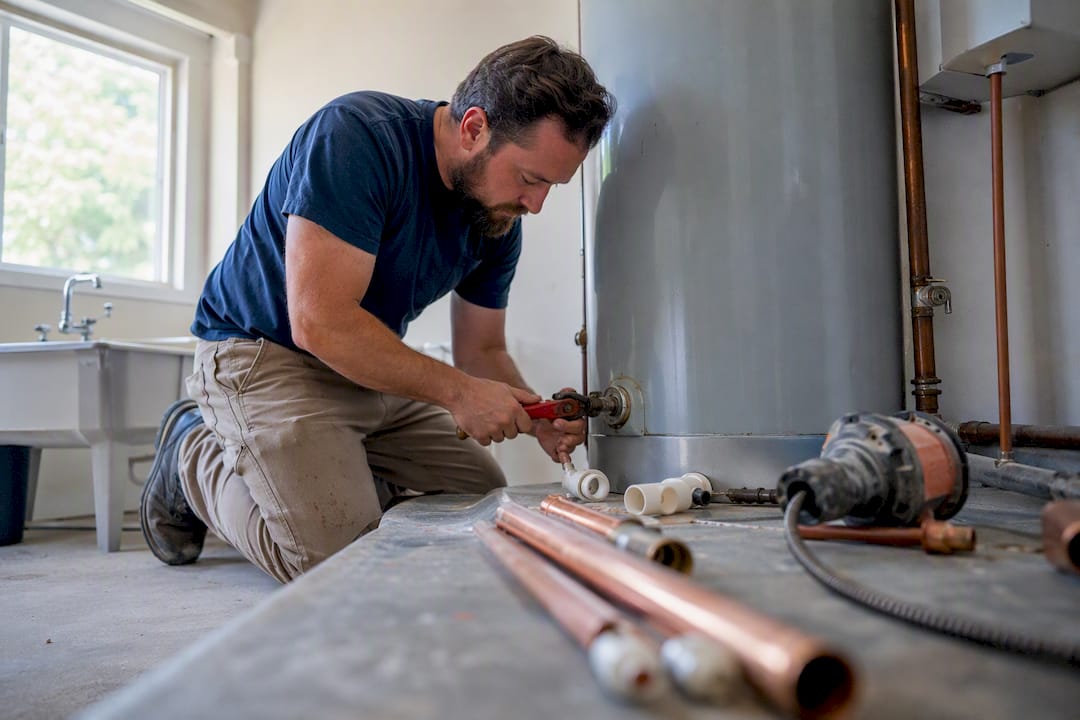
Plumbers install and maintain the systems that bring clean water in and send waste water out, along with the fixtures and appliances connected to them. Most of the job happens inside finished buildings, working around drywall, cabinetry, and existing infrastructure rather than open industrial floors.
Core plumber duties include:
- Installing and repairing water supply lines and drainage systems
- Cleaning clogged drains and diagnosing leaks
- Fitting sinks, toilets, showers, and water heaters
- Connecting gas lines for appliances such as ranges and dryers
- Reading blueprints and following local plumbing codes
Plumbers usually work in homes, apartment buildings, restaurants, retail stores, and light commercial construction. Employers range from independent contractors and small plumbing service companies to general contractors staffing new construction projects. According to a Red Seal occupational standard for plumbers, the trade centers on water-based systems and code compliance, which is why state or local licensing is commonly required before a plumber can work unsupervised.
Everyday tools reflect that residential and commercial focus: PVC and copper pipe, pipe wrenches, drain augers, soldering torches, and pipe threaders. A typical Tuesday might mean replacing a failed water heater in the morning and snaking a clogged kitchen drain in the afternoon.
| Point | Details |
|---|---|
| Primary systems | Potable water, drainage, and gas lines in finished buildings. |
| Common materials | PVC, copper, and plastic piping rather than heavy-gauge steel. |
| Licensing | State or local plumbing license typically required to work independently. |
What Does A Pipefitter Do In An Industrial Setting?
Pipefitters install and maintain the piping systems that move steam, chemicals, gases, and other materials under pressure through industrial facilities. The work is less about fixtures and more about moving large volumes of material safely through complex mechanical networks.
Core pipefitter duties include:
- Laying out and fabricating pipe runs from engineering drawings
- Welding joints in carbon steel, stainless steel, and specialty alloys
- Rigging and hoisting heavy pipe sections into place
- Pressure testing completed systems before they go live
- Commissioning new piping runs alongside plant engineers
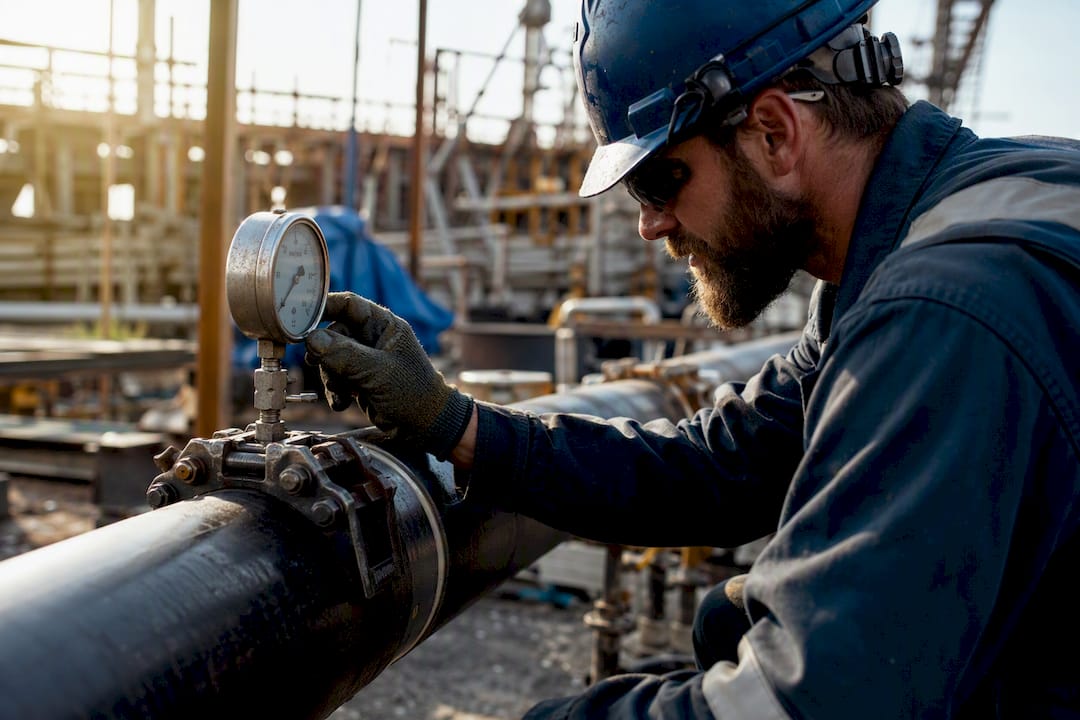
Pipefitters commonly work in power plants, oil refineries, manufacturing facilities, shipyards, and the mechanical rooms of large commercial buildings. Their employers tend to be industrial contractors, engineering firms, or in-house plant maintenance teams rather than small service companies. A Red Seal occupational standard for steamfitters and pipefitters describes the trade’s focus on high-pressure steam systems and specialized welding, work that carries real consequences if a weld fails under pressure.
Tools and materials look heavier and more industrial than a plumber’s kit: cutting torches, TIG and stick welding rigs, pressure gauges, and heavy-gauge stainless or carbon steel pipe. A single shift might involve welding a new steam line section, then pressure testing it to confirm the weld holds before the plant restarts.
How Do Plumbers And Pipefitters Actually Compare?
The two trades share DNA. Both read blueprints, cut and join pipe, and complete a multi-year apprenticeship before working independently. Where they diverge is the system they serve and the credential that proves they can be trusted with it.
| Dimension | Plumber | Pipefitter |
|---|---|---|
| Typical duties | Fixture installation, drain repair, water heaters | Fabrication, welding, pressure testing |
| Workplace/industry | Residential and light commercial buildings | Industrial plants, refineries, power stations |
| Training & certification | State/local plumbing license | Welding certification, pressure-system qualifications |
| Tools & materials | PVC, copper, wrenches, augers | Carbon/stainless steel, welding rigs, cutting torches |
| Pay shape | Steady, code-driven service work | Often higher for certified welders on industrial jobs |
| Skills & physical demands | Fixture fitting, customer contact | Rigging, welding, confined-space tolerance |
| Career specializations | Service, new construction, gas fitting | Steamfitting, process piping, plant maintenance |
Both trades require an apprenticeship program combining classroom instruction with paid on-the-job hours, and both demand solid blueprint reading. The lines blur at the edges, too: some plumbers specialize in commercial hydronics that start to resemble pipefitting, and some fitters spend their careers on low-pressure mechanical systems inside office buildings rather than a refinery.
How Long Does It Take To Become Each?
Both trades follow the same basic model: paid on-the-job training paired with classroom instruction, stretched across several years before a worker reaches journey-level status. The clock starts the same way for both, then diverges based on what credential the job demands.
- Apprenticeship enrollment (year one): most programs combine roughly 2,000 hours of paid field work annually with technical classroom instruction.
- Journey-level status (typically four to five years): apprentices who complete their hours and coursework earn journeyman status, allowing them to work with less direct supervision.
- Specialized certification (ongoing): plumbers pursue state or local licensing exams; pipefitters pursue welding certifications and pressure-vessel or steam-system qualifications specific to their employer’s industry.
- Master or leadership track (five-plus years): experienced tradespeople in either field can move toward master licensure or into supervisory and project leadership roles.
State licensing boards verify plumber credentials directly, while welding certifications for pipefitters are typically issued by testing bodies tied to the specific process or code the employer follows. Veterans can often apply GI Bill benefits toward registered apprenticeships in either trade, and local union halls or community trade schools are the fastest way to check current openings.
Pro Tip: Before committing to either path, ask a local union hall or trade school for their current apprentice acceptance rate. Some programs get flooded with applicants while others actively recruit, and that gap tells you a lot about local demand.
What Do Plumbers And Pipefitters Get Paid?
Pay for both trades varies significantly by region, industry, and certification level, and the Bureau of Labor Statistics Occupational Employment Statistics program is the most reliable place to check current wage tables for your metro area rather than relying on a single national average. Wage data there is broken out by state and metropolitan area, which matters because a pipefitter in a refinery town can earn very differently from one in a region with little heavy industry.
Several factors move the number up or down:
- Industry (industrial plant work generally pays more than residential service)
- Welding certifications and pressure-system qualifications
- Overtime availability, especially on plant shutdowns and turnarounds
- Union membership and local labor agreements
- Geographic location and cost of living
Typical employers for plumbers include residential and commercial service companies, general contractors, and property management firms. Pipefitters more often land with industrial contractors, plant maintenance departments, and large mechanical construction firms staffing multi-year industrial projects.
What Skills And Physical Demands Should You Expect?
Both trades demand strong blueprint reading, basic math, and mechanical aptitude, but the specialized skills split sharply from there. Plumbers lean on fixture installation, diagnostic troubleshooting, and customer communication since much of the job happens in occupied homes and businesses. Pipefitters lean on welding precision, rigging judgment, and the ability to read complex isometric drawings for process systems.
Physical demands run high in both trades. O*NET data on the occupation documents significant time spent standing, bending, and working in awkward positions, along with exposure to hazardous conditions.
- Frequent lifting, kneeling, and working in tight crawl spaces or trenches
- Exposure to heat, noise, and fumes, especially during welding
- Extended standing and repetitive overhead work
A plumber’s most-used tools are a pipe wrench, drain auger, and torch for soldering copper. A pipefitter’s most-used tools are a welding rig, pipe threader, and pressure gauge for testing completed runs.
What Safety Risks Come With Each Trade?
Both trades carry real physical risk, and OSHA sets the baseline safety standards and PPE guidance that responsible employers follow in both fields. Standard protection includes eye protection, gloves, hearing protection, respirators where fumes or dust are present, and hot-work controls for anyone welding or using a torch.
Common hazards include confined spaces, hot work near flammable materials, chemical exposure, and slip-and-fall risk on wet or uneven surfaces. Employers typically mitigate these with hot-work permits, confined-space entry procedures, and mandatory PPE checks before a shift starts.
Plumbing work is governed heavily by local building and plumbing codes, with inspections tied to nearly every stage of installation. Pipefitting work leans more on industrial process standards and formal weld inspection protocols, since a failed weld on a high-pressure line carries far greater consequences than a leaky residential joint.
How Do You Decide Which Trade Fits You?
The honest answer depends on where you want to spend your workday and what kind of technical work energizes you. A few questions cut through the noise fast.
- Do you prefer finished, occupied spaces or industrial job sites? Plumbing keeps you in homes and businesses; pipefitting puts you in plants and mechanical rooms.
- Are you drawn to welding and fabrication, or fixture installation and customer service? That preference alone often predicts which trade will hold your interest for a career.
- What’s your tolerance for hazardous environments? Confined spaces, hot work, and industrial noise are more constant in pipefitting.
- Have you talked to a working plumber or pipefitter? A short site visit or informational interview, asking about a typical week, overtime expectations, and required certifications, tells you more than any job description.
From there, the practical move is an entry-level helper position, a short trade-school introductory course, or a direct call to a local union hall to check apprenticeship openings and required credentials. Petratalent’s guide on hiring plumbing apprentices strategically also outlines what employers look for in early-career candidates, useful reading before your first interview.
What Do Hiring Trends Tell Job Seekers?
Contractors staffing plumbing and pipefitting roles consistently pay a premium for verifiable welding certifications and pressure-system experience, credentials that move a candidate from generalist to specialist fast. Demand is also rising for multi-trade candidates who can move between plumbing and light mechanical piping work.
- Certified welders with pressure-system experience command higher offers on industrial jobs
- Contractors increasingly emphasize technical vetting over resume claims alone
- Candidates who document hands-on hours, not just apprenticeship completion, screen faster
Pro Tip: When applying, list specific systems you’ve worked on (steam, hydronic, process gas) rather than just “piping experience.” Recruiters and hiring managers screen for that specificity first.
A Recruiter’s View On Placing Both Trades
Placing plumbers and pipefitters for contractors across the country, one pattern stands out: candidates who can clearly describe the systems they’ve worked on get interviews faster than candidates who list generic duties.
For job seekers, the fix is simple: name the pipe materials, pressure ratings, or fixture types you’ve handled, not just the job title. For hiring managers, the fastest vetting shortcut is asking a candidate to walk through one recent job from start to finish. How they describe the sequence tells you more about competence than any certificate on paper.
Choosing between plumbing and pipefitting comes down to environment and system type, not which trade pays more or is “better” overall.
| Point | Details |
|---|---|
| Core distinction | Plumbers handle water and drainage in buildings; pipefitters handle high-pressure industrial piping. |
| Shared foundation | Both require multi-year apprenticeships combining paid work and classroom training. |
| Credential difference | Plumbers need state or local licensing; pipefitters need welding and pressure-system certifications. |
| Pay driver | Welding certification and industrial experience often push pipefitter pay higher on specific jobs. |
| Decision factor | Worksite preference (finished spaces vs. industrial plants) is the clearest signal of fit. |
Where To Find Authoritative Information On Both Trades
- The Bureau of Labor Statistics Occupational Outlook Handbook covers job duties, training paths, and outlook for both trades in one place.
- O*NET OnLine breaks down specific job tasks and physical demands recorded for the occupation.
- OSHA publishes the safety standards and PPE requirements that govern job sites in both fields.
- The BLS Occupational Employment Statistics tables let you compare wages by state and metro area instead of relying on one national figure.
Contractors building out a plumbing or mechanical team can find role-specific hiring guidance through Petratalent’s plumbing recruiting services, including technical vetting built around the exact skills covered in this guide.
Frequently Asked Questions
What does pipefitter vs plumber mean in simple terms?
It means the two trades specialize in different piping systems: plumbers handle water, waste, and gas lines in buildings, while pipefitters handle high-pressure, steam, and process piping in industrial settings.
Is a pipefitter the same as a plumber?
No. They share overlapping skills like blueprint reading and pipe joining, but pipefitters focus on industrial systems and welding, while plumbers focus on residential and commercial water systems and hold state plumbing licenses.
Which pays more, plumbing or pipefitting?
It depends heavily on certification, industry, and location. Check BLS wage tables for your area rather than assuming one trade universally pays more, since certified pipefitters on industrial projects often out-earn entry-level plumbers, but experienced master plumbers can out-earn uncertified fitters.
Do pipefitters need a license like plumbers do?
Pipefitters typically need welding certifications and pressure-system qualifications rather than a state plumbing license, though licensing requirements vary by state and employer.
Can a plumber become a pipefitter, or vice versa?
Yes, with additional training. A plumber moving into pipefitting usually needs welding certification, while a pipefitter moving into plumbing typically needs to complete state licensing requirements.
Sources
- Bureau of Labor Statistics — Plumbers, Pipefitters, and Steamfitters (OOH)
- O*NET OnLine — Plumbers, Pipefitters, and Steamfitters (47-2152.00)
- Occupational Safety and Health Administration (OSHA)
- Bureau of Labor Statistics — Occupational Employment Statistics (OES)
Recommended
Related Posts
October 13, 2026
Recruiting Contract Terms: 10 Checks and Ready to Use Clauses
Define fee triggers, candidate ownership, guarantees, and compliance terms. Get a master agreement, short schedule,…
October 12, 2026
Offer Acceptance Rates: Segment Benchmarks, HVAC’s 3–5 Day SLA
See why a 78% to 82% offer acceptance benchmark can mislead, how role and source…
October 11, 2026
Bad Hires Can Cost Construction Firms 30% to 200% of Salary
Bad hires can cost construction firms 30% to 200% of annual salary. Calculate recruiting, rework,…
October 10, 2026
Construction Labor Forecasting for PMs: 7 Steps to Time Hiring
Learn when construction project managers should use WBS or simulation, track labor KPIs, and turn…