



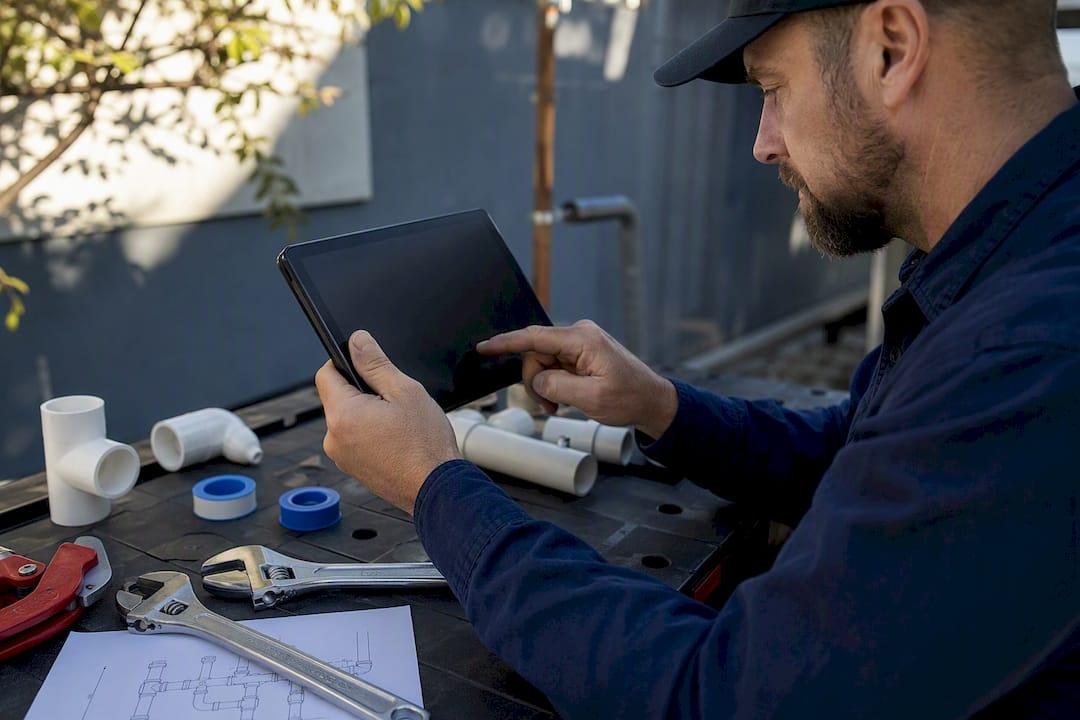
Verifying a plumber’s credentials properly means confirming five things before an offer letter goes out: an active license matched to the job scope, current insurance and bonding, verified identity, checked references, and a documented skills test. Skipping any one of these creates measurable risk. State licensing board lookups, continuing education records, and OSHA compliance history are the core entities every hiring team should pull before day one. The single highest-priority action: get the candidate’s license number and confirm active status with the issuing board before scheduling anything else.
- License number confirmed active with the issuing state board
- License type matches the job (journeyman, master, gas, or backflow)
- Insurance certificate and bonding verified directly with the carrier
Key Takeaways
Proper plumber credential verification requires a sequenced check of license status, insurance, identity, references, and hands-on skill before any offer becomes final.
| Point | Details |
|---|---|
| Verify license first | Confirm active status and correct license class directly with the issuing state board. |
| Call the insurer directly | Don’t rely on a certificate alone; confirm policy numbers and expiration with the carrier. |
| Test skills with a paid shop test | Run a 30 to 60 minute working interview scored on technical accuracy, safety, and ownership. |
| Document and retain everything | Save license screenshots, COIs, and reference notes in one file with a recheck date. |
| Petratalent manages vetting for you | Petratalent builds license, insurance, and skills verification into its placement process before candidates reach your desk. |
Table of Contents
- How to Verify Plumber Credentials Properly, Step by Step
- How Should You Assess Hands-On Skills and Character?
- What Background Checks and Compliance Steps Are Required?
- What Documents Should You Request and Keep on File?
- What Red Flags Mean You Should Stop the Hire?
- Who Owns Each Verification Step and How Long It Takes
- A Recruiter’s Note on Why This Workflow Holds Up
- Let Petratalent Handle the Technical Vetting
- Frequently Asked Questions
- Sources
How to Verify Plumber Credentials Properly, Step by Step
Credential verification works best as a gated sequence, not a checklist you complete in random order. Treat it as four stages that build on each other: legal compliance, financial protection, workmanship accountability, and fraud avoidance, according to hiring frameworks used across the trades. Skip a stage and you inherit its risk.
1. Collect identifiers first. Before anything else, your recruiter or HR contact needs the candidate’s legal name, license or certification number, and written consent for a background trace. This step takes minutes but everything downstream depends on it.
2. Verify the license itself. Confirm the license is active, matches the correct class for the work (journeyman versus master, gas endorsement, backflow certification), and is valid in your operating jurisdiction. A thorough license check also means checking the renewal date so you’re not onboarding someone who lapses in 60 days.
3. Confirm insurance and bonding. Request a certificate of insurance and call the carrier directly. Verifying contractor license status before hiring should always include a direct check with the insurer and bonding company, not just a glance at the paperwork the candidate hands you.
4. Search complaint and disciplinary records. State board portals typically show more than license status. Washington’s contractor verification tool, for example, surfaces workers’ comp account status, safety citations, and lawsuits filed against a surety bond. Save a screenshot of the full lookup, not just the “active” badge.
5. Run background and motor vehicle checks. Scope this to the role. Field technicians who drive company vehicles need an MVR pull; anyone handling customer property needs a county-level criminal search.
6. Verify references and recent work. Call or email the two most recent employers and ask about a specific, recent callback rather than general performance.
7. Capture and file documentation. Every verification artifact, from the license screenshot to reference notes, needs a home and a retention date.
| Step | Owner | What gets recorded |
|---|---|---|
| Identifiers and consent | Recruiter/HR | Legal name, license number, signed consent form |
| License status check | HR or admin | Screenshot of board lookup, renewal date |
| Insurance/bonding call | Admin or legal | Policy number, carrier confirmation, expiration date |
| Background and MVR | HR (approved vendor) | Vendor report, adverse-action notes if applicable |
| Reference calls | Hiring manager | Reference name, employer, callback example discussed |
| Document filing | Admin | PDF folder, retention date, recheck flag |
How Should You Assess Hands-On Skills and Character?
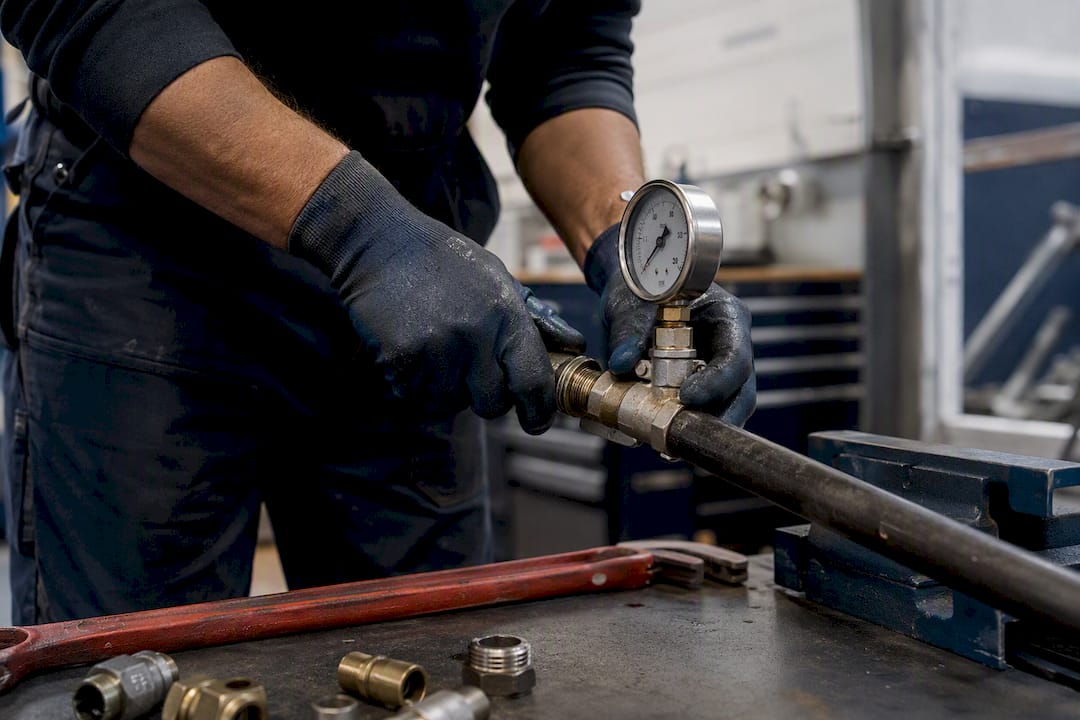
Credentials tell you a candidate is legally allowed to do the work. They don’t tell you whether the person is any good at it, or whether they’ll own a mistake instead of hiding it. That’s where a short screen and a working interview earn their keep.
Start with a phone screen of 10 to 15 minutes. Cover four non-negotiables: driving record, whether the candidate can realistically service your coverage area, compensation expectations, and one scenario question (“Walk me through the last callback you had to handle”). If the candidate can’t describe a specific job, that’s worth noting.
Follow with a paid shop test or field ride-along, 30 to 60 minutes long. Real-world examples and hands-on shop tests reveal mechanical judgment and safety habits that a resume never will. Structure it around:
- A defined task with a clear success outcome (diagnose a leak, size a fitting, read a schematic)
- Observed safety checkpoints (lockout procedures, PPE use, tool handling)
- A debrief question asking the candidate to explain their reasoning
Score the test on four axes: technical accuracy, safety awareness, communication, and ownership. A simple 1 to 4 scale per category, with a minimum combined threshold your team agrees on in advance, keeps the scoring consistent across interviewers.
Pro Tip: Ask about the candidate’s most recent callback specifically, not a “tell me about a tough job” generality. Candidates who deflect blame on a callback question tend to deflect blame on the job site too.
What Background Checks and Compliance Steps Are Required?
Field plumbing roles justify a defined, consistent background screen. That typically includes identity verification through an SSN trace, county-level criminal searches for places the candidate has lived, an MVR for any driving role, and drug testing where company policy or a client contract requires it. Background screening for plumbing hires should also include a recheck schedule, particularly for drivers and safety-critical field staff.
Legal compliance matters as much as the check itself. Get signed consent before running anything, follow adverse-action notice requirements if a report affects your decision, and know that permissible scope varies by state, so confirm what’s allowed before you build a standard process.
- Identity and SSN trace before any other background step
- County criminal search scoped to prior residences
- MVR for every role involving a company vehicle
- Insurance confirmation directly with the carrier, including effective and expiration dates
Pro Tip: A certificate of insurance with a future expiration date is not the same as a certificate that stays valid through the length of the project. Calendar the expiration and recheck before it lapses.
Escalate immediately if you find license revocation, an open disciplinary action, a lapsed policy, or credentials that don’t match the identity on file. None of those are gray areas.
What Documents Should You Request and Keep on File?
A verification file that lives in someone’s inbox isn’t a verification file. Standardize the documents you request and build one template your team fills out the same way every time.
Document checklist:
- License card or a saved screenshot of the state board profile
- Certificate of insurance covering liability and workers’ compensation
- Bond documentation where the state or job requires one
- Continuing education records and renewal timeline
- Government-issued ID matching the license record
Copyable verification form fields:
| Field | What to enter |
|---|---|
| License number | Exact number from license card |
| Issuing board | State licensing authority name |
| Verified status | Active, expired, suspended, revoked |
| Insurance carrier | Company name and policy number |
| Verification date | Date the lookup or call was completed |
| Verifier name | Person on your team who confirmed it |
Your contract paperwork should mirror this discipline. Confirm the certification number of the plumber performing the work appears on the estimate, permit responsibility is spelled out, warranty terms are in writing, and payment terms include lien waiver language where relevant.
Retain verification proof for the life of employment plus whatever your state’s statute of limitations suggests for employment claims, and timestamp every recheck so a stale license lookup doesn’t pass as current.
What Red Flags Mean You Should Stop the Hire?
Some issues are immediate disqualifiers. No license number on file, refusal to produce a certificate of insurance, or a name mismatch between the application and the license record all mean you stop and ask before going further.
Other red flags show up as patterns rather than single incidents:
- Multiple complaints tied to water damage or code violations, especially clustered in a short window
- Employment gaps with no clear explanation the candidate can walk you through
- References that seem coached or that can’t confirm specific project details
Common mistakes compound these risks. Saving a screenshot without the underlying lookup, skipping a direct call to the insurer, or failing to recheck an MVR after hire all leave gaps a careful candidate wouldn’t have. If a red flag surfaces, pause the process, loop in legal or operations, request additional documentation, and run a targeted recheck before deciding either way.
Who Owns Each Verification Step and How Long It Takes
Verification only stays consistent when specific people own specific steps. Recruiters handle identity and consent forms. Operations managers run the shop test and sign off on technical fit. Admin staff capture and file documents. Legal or insurance staff confirm the COI directly with the carrier.

| Step | Typical owner | Expected turnaround |
|---|---|---|
| Phone screen | Recruiter | Same day |
| License lookup | HR/admin | Minutes |
| COI verification | Legal/insurance contact | 1 to 3 business days |
| Shop test | Operations manager | 1 day |
| Background check | HR (via vendor) | 2 to 5 business days |
Pro Tip: Build one shared folder per candidate for every verification artifact. It cuts the back-and-forth between recruiter, operations, and legal down to almost nothing.
Recheck licenses, MVRs, and insurance on an annual basis at minimum, more often for roles where driving or safety exposure is high.
A Recruiter’s Note on Why This Workflow Holds Up
The teams that skip stages, jumping straight to a shop test before confirming the license, are usually the ones fielding callback complaints six months later. A structured technical vetting approach built around this sequence catches problems before they become customer-facing.
Let Petratalent Handle the Technical Vetting
Running this entire workflow in-house, on top of sourcing candidates, is where most contractors lose time. Petratalent’s technical vetting and workforce solutions build license verification, insurance confirmation, and shop testing directly into the hiring pipeline before a candidate ever reaches your desk.

Petratalent specializes in placing licensed plumbers and HVAC technicians who’ve already cleared technical screening, so your team spends its time on final interviews instead of chasing insurance carriers. Services relevant to the workflow above include:
- Technical screening against the license class and job scope you specify
- Verified candidate pools with credential and COI checks already completed
- Managed shop tests scored against a consistent rubric before candidates advance
If your current process feels stretched thin, visit Petratalent’s plumbing staffing services to see how a managed vetting pipeline fits into your hiring timeline, or explore the full service overview to get a placement conversation started.
Frequently Asked Questions
What does it mean to verify plumber credentials properly?
It means confirming an active license matched to the job scope, current insurance and bonding, verified identity, checked references, and a documented skills assessment before extending an offer.
How do I verify a plumber’s license is active?
Look up the license number directly on the issuing state board’s database, confirm the status reads active, and save a screenshot with the date for your records.
What’s the difference between a journeyman and master plumber license?
A journeyman license typically allows supervised or standalone residential work depending on the state, while a master license usually permits pulling permits and supervising other plumbers. Confirm exact scope requirements with your state board.
Do I need to verify insurance separately from the license check?
Yes. License status and insurance coverage are tracked separately in most states, so call the insurance carrier directly to confirm the policy is active and matches the coverage minimums your work requires.
How long should background checks take for a plumbing hire?
Most background checks, including county criminal searches and MVR pulls, complete within two to five business days when run through an established vendor.
What should I do if a candidate’s credentials don’t check out?
Pause the hiring process, request additional documentation, and escalate to legal or operations before making a final decision. Don’t proceed on the assumption the gap is a paperwork error.
Sources
Keep a short list of trustworthy references on hand for your verification team:
- Hire Technicians & Contractors: Complete Vetting Guide – Service Nation
- Verify a Contractor, Tradesperson or Business
- What to Know About Background Checks for Plumbing Businesses – Sapphire Check
- Hiring a trades professional checklist — National Trades Authority
Save every lookup as a dated record, not just a bookmark. If your team needs a partner to run this process end to end, Petratalent is built for exactly that.
Recommended
Related Posts

October 13, 2026
Recruiting Contract Terms: 10 Checks and Ready to Use Clauses
Define fee triggers, candidate ownership, guarantees, and compliance terms. Get a master agreement, short schedule,…

October 12, 2026
Offer Acceptance Rates: Segment Benchmarks, HVAC’s 3–5 Day SLA
See why a 78% to 82% offer acceptance benchmark can mislead, how role and source…

October 11, 2026
Bad Hires Can Cost Construction Firms 30% to 200% of Salary
Bad hires can cost construction firms 30% to 200% of annual salary. Calculate recruiting, rework,…

October 10, 2026
Construction Labor Forecasting for PMs: 7 Steps to Time Hiring
Learn when construction project managers should use WBS or simulation, track labor KPIs, and turn…